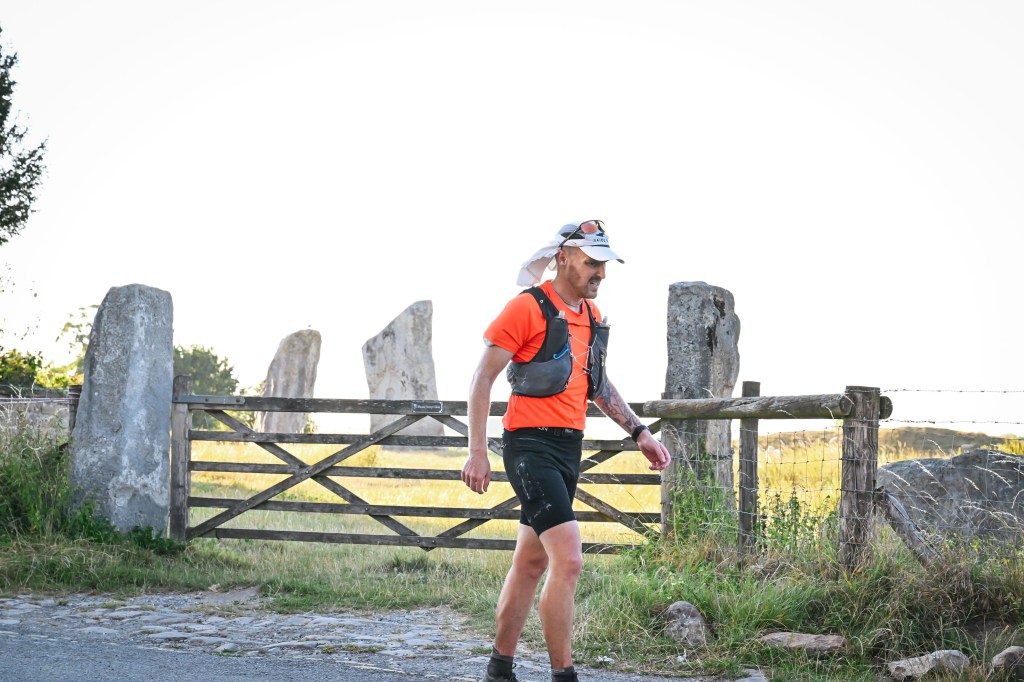
Race to the stones, by Threshold Sports, is a 100 km point-to-point course, starting in Lewknor and ending near the Avebury stones, in Wiltshire, UK.
The Race route covers the western section of the ancient Ridgeway trail, from Lewknor to Avebury, open, exposed chalk downland passing landmarks including the Uffington White Horse, Liddington Castle and finishing at the Avebury Stone Circle, a UNESCO World Heritage Site.
Fast, non-technical and with relatively little climbing (roughly 1300m), but with minimal shade, managing the heat would be my main challenge, with temperatures exceeding 32°C/90°F and no cloud cover on very exposed chalk ridgeline trails.
The DNF
I had attempted this course last year (2025). It was even hotter and just as exposed, I had to throw the towel in at Pit stop 3 (about 34 km).
My main mistake from that attempt was that I had filled both of my water bottles up with Tailwind, a strong Carbohydrate mix.
Because of the heat I was drinking a lot of Tailwind to keep myself hydrated in the early stages. This caused me to lose control of my bowels, and I had a lot of stomach cramping.
I deteriorated fast.
I learned my lesson the hard way. I will not mix hydration with fueling. At least not in this race, and summer races in general, where the heat and sun require me to drink a lot more water.
This time my bottles only contained water or juice, and only my right bottle contained electrolyte tabs.
My race mantra
I wanted to simplify my race strategy down to something easy to memorise and that wouldn’t need me to check my phone or a piece of paper to remind myself what I should be doing.
- “Nothing faster than 6. Nothing greater than 135.” Do not run quicker than 6 minutes per kilometer, even if it feels uncomfortably slow, and do not let my heart rate increase above zone 2, allowing for “cardiac drift” which means my heart rate will be a few beats higher in extreme heat for the same effort and pace, around 135bpm.
- “Basecamp at 5.25 hours.” 5:25 hours to arrive at Basecamp. No earlier.
- “Decide at 60.” If I feel good enough I will lock my pace in at around 6:30s per kilometer. If I am hurting I will just cruise home.
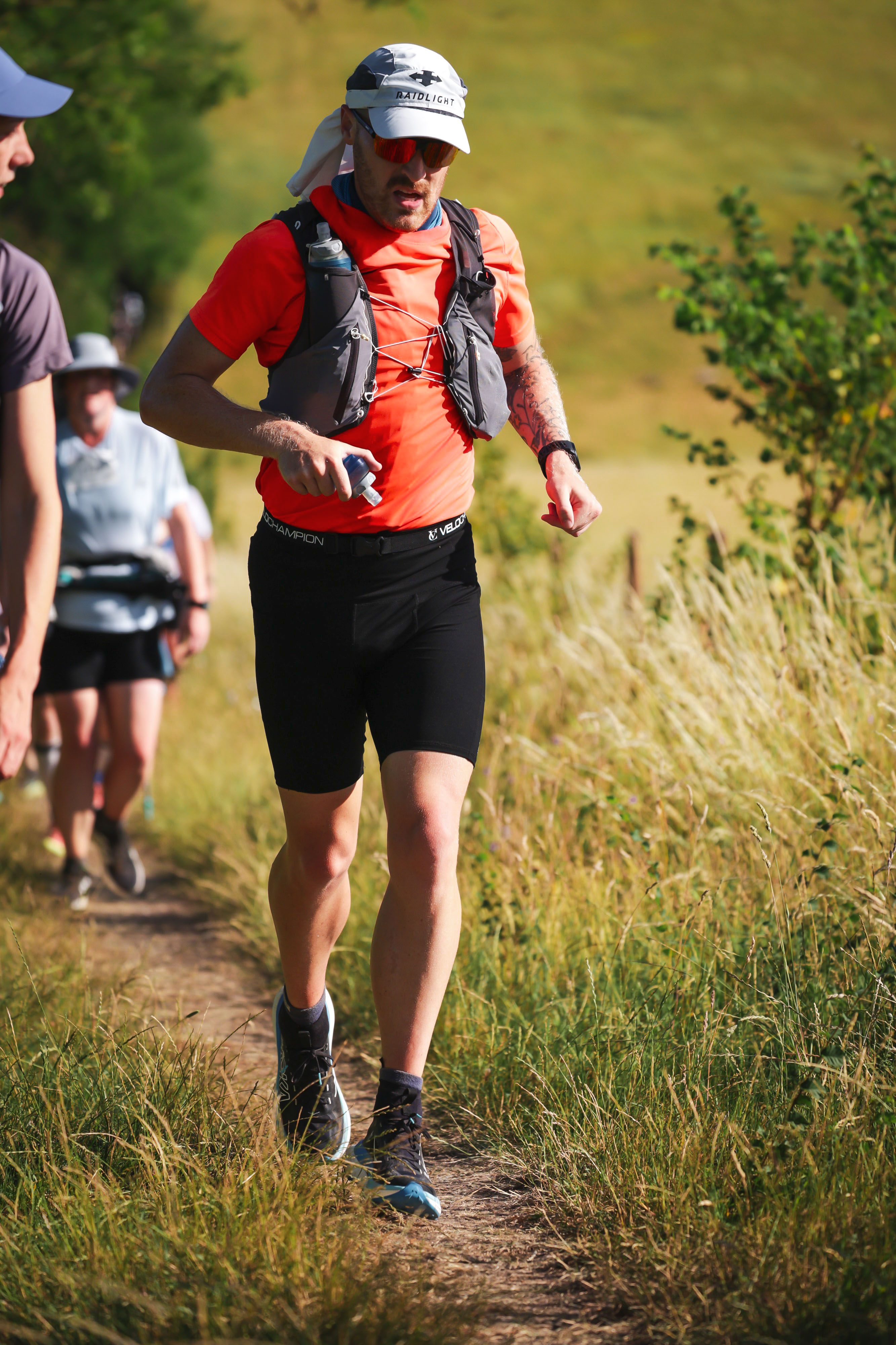
This strategy worked well, especially in the first half. For the most part I just stuck to about 6:10/km pace which was about 125bpm, well within my comfort zone.
I did allow my heart rate to creep up to around 145bpm briefly on some of the climbs, which were comfortable enough to run up and I was soon back down to around 125bpm again.
I arrived at Basecamp (halfway) at around 5 hours 40 minutes which I was happy with. I felt like I had arrived without pushing my body too hard. But the relentless heat had already begun taking its toll, it just seemed to sap my energy regardless of how easy and controlled I was trying to take the first half.
Grinding it out
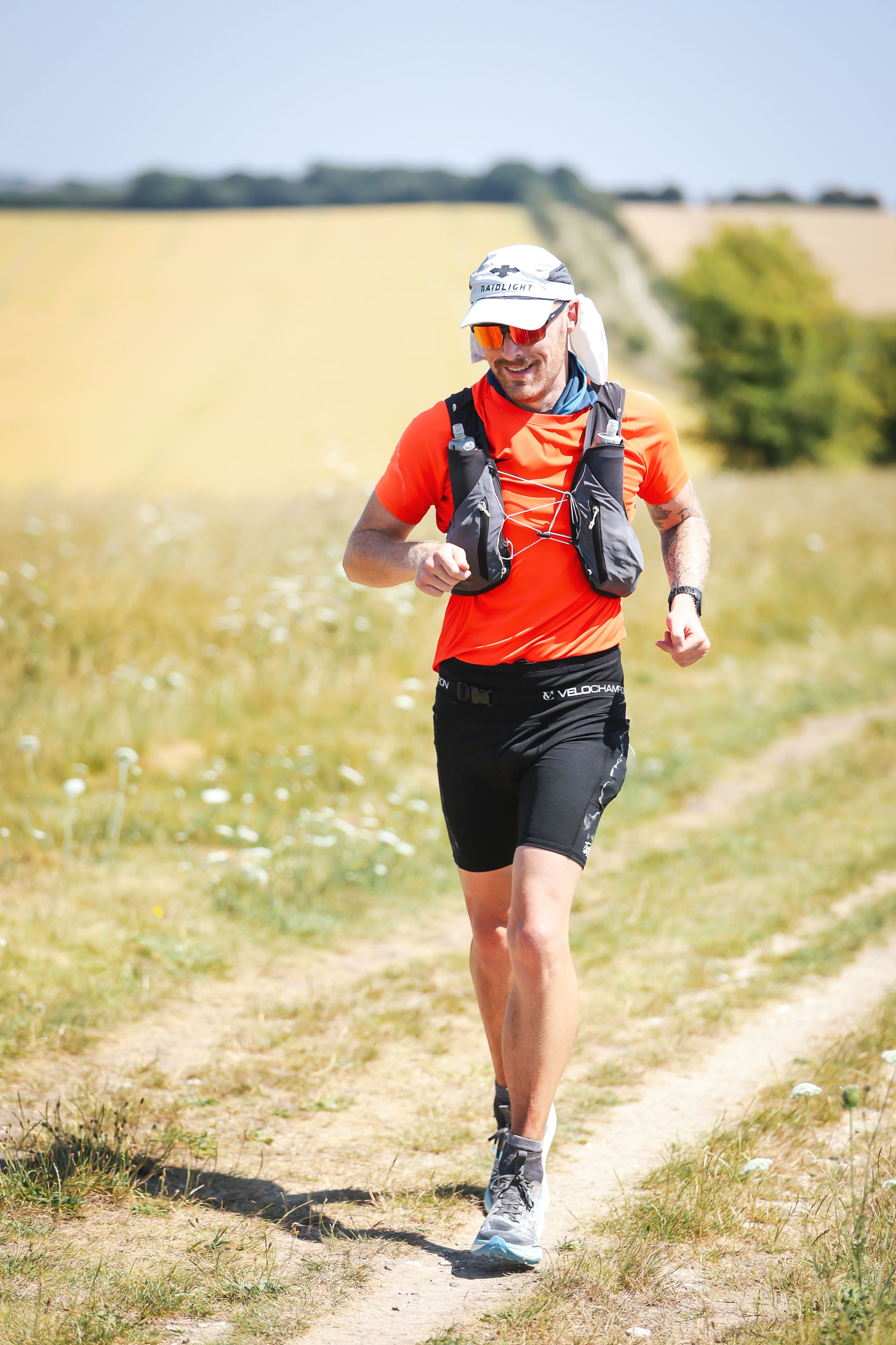
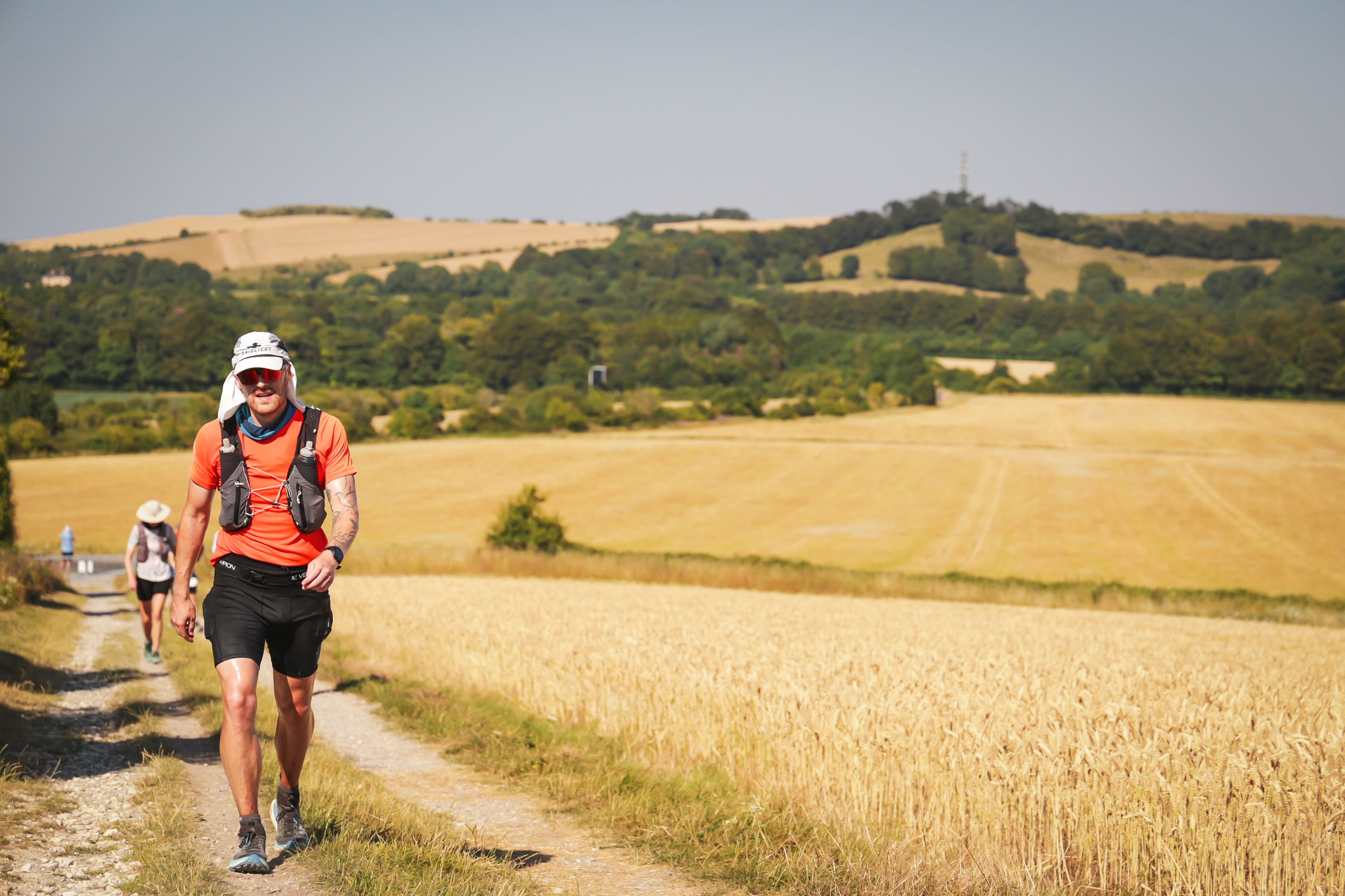
I was not able to push from 60 km. By this point I was in survival mode. The heat was unbearable. The ridgeline is so exposed, the chalk was reflecting the heat back at me, making the temperature feel even hotter.
I was wearing a Sahara cap and cooling scarf. I would completely soak both in a bucket of water at every aid station.
The support in most of the small villages and towns that I passed through was fantastic, the locals seemed to know about the race and many of them were supporting, standing outside their houses with hose pipes, drenching me in water. I was gifted an Ice pop twice, and was given actual ice to put under my cap. These kind gestures helped me so much.
By around 80 km it really became a struggle to get any carbs in. I had gel-fatigue big time, and could only swallow small amounts of salty crisps, banana, water melon, and a small jam sandwich.
Otherwise, I didn’t stop consuming the gels, but I would have to take very small sips, very often, rather than the prior 4 or 5 gulps per 90g pouch.
Ironically, in retrospect, I think I could have tried to drink a whole sachet of Tailwind at one of the later aid stations, perhaps knocking back a sachet of Tailwind quickly might have worked. But I guess it also could have made me feel sick.
I didn’t struggle with any sickness for the entire race, right up until 99.7 km where I suddenly stopped mere meters from the finish line to dry heave non-stop for a few minutes. Nothing came up except a small amount of water, which was very telling.
This was the first time I ever needed to be sick in a race, so it was clear the toll the conditions had had on my body.
Injuries
I brought my right knee injury into this race. This was caused in training a couple of months ago, before Race to the King this year. So I have now run two 100 km races on it, and it felt bad again from quite early on. The few weeks of reduced volume and cross training in between the races has not been enough to heal this injury, and likely contributed to the second injury I picked up.
My left Achilles started to flare up in the later stages. I think this might have been caused by a mixture of lower volume in training and perhaps compensation for the knee injury.
So now I have had to cancel my next race in four weeks, and will take a couple of months to heal and get consistent weekly volume in before committing to the next race.
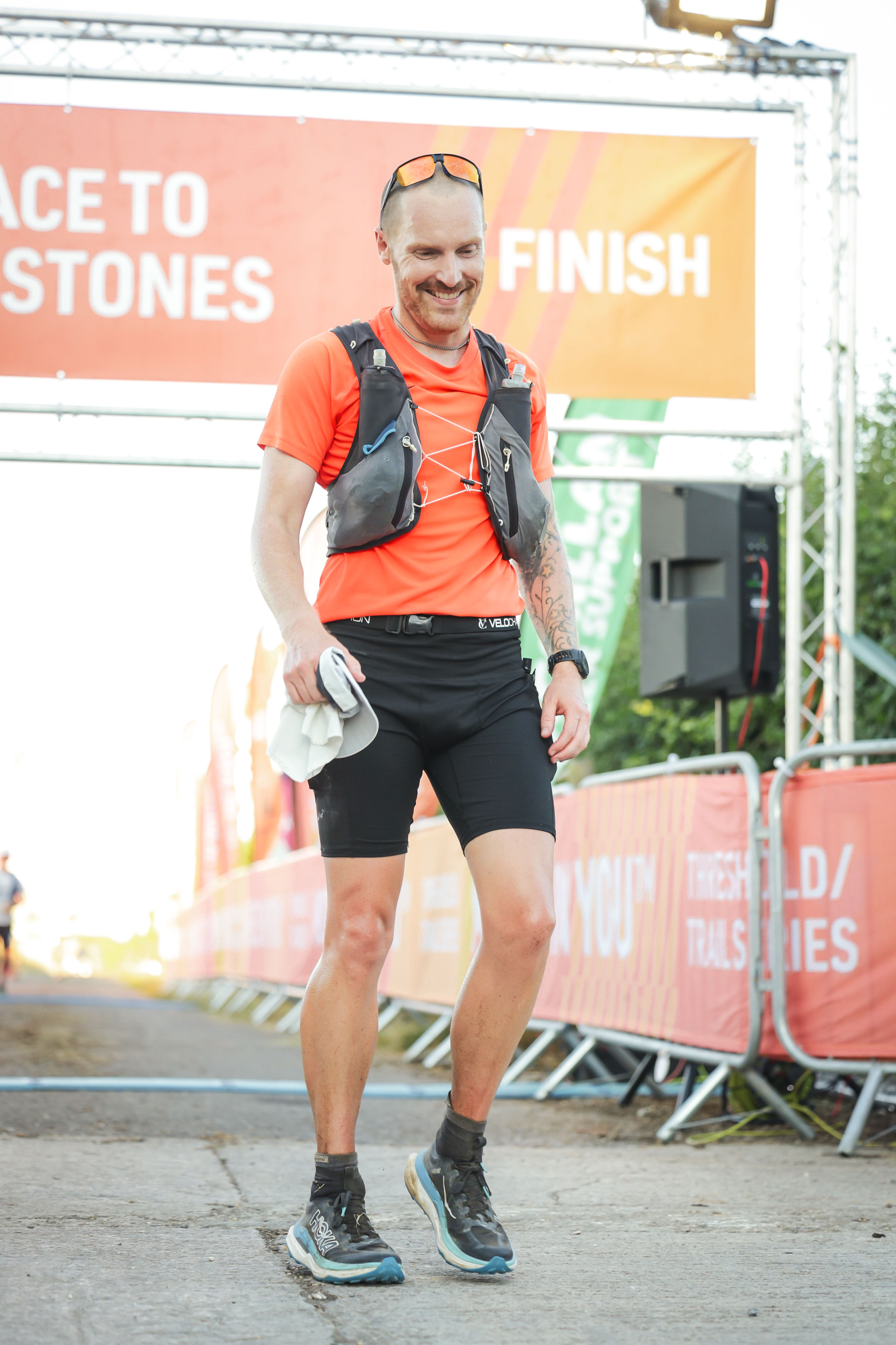
Crossing the line
I’m happy I got the job done, and given the heat, the knee injury and running my second 100km in three weeks, I am very happy with my 12:34 finish time. Other than the knee, my body is recovering well, so I am optimistic that I can push again in a few months.
I finished in 60th place out of 827 starters.


Leave a Reply