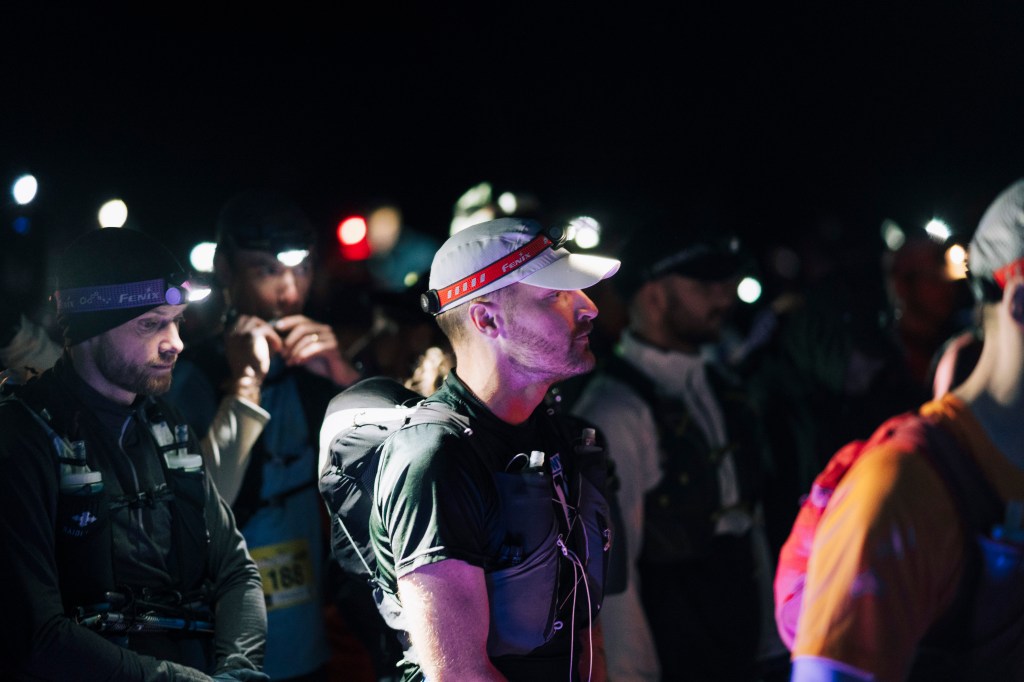
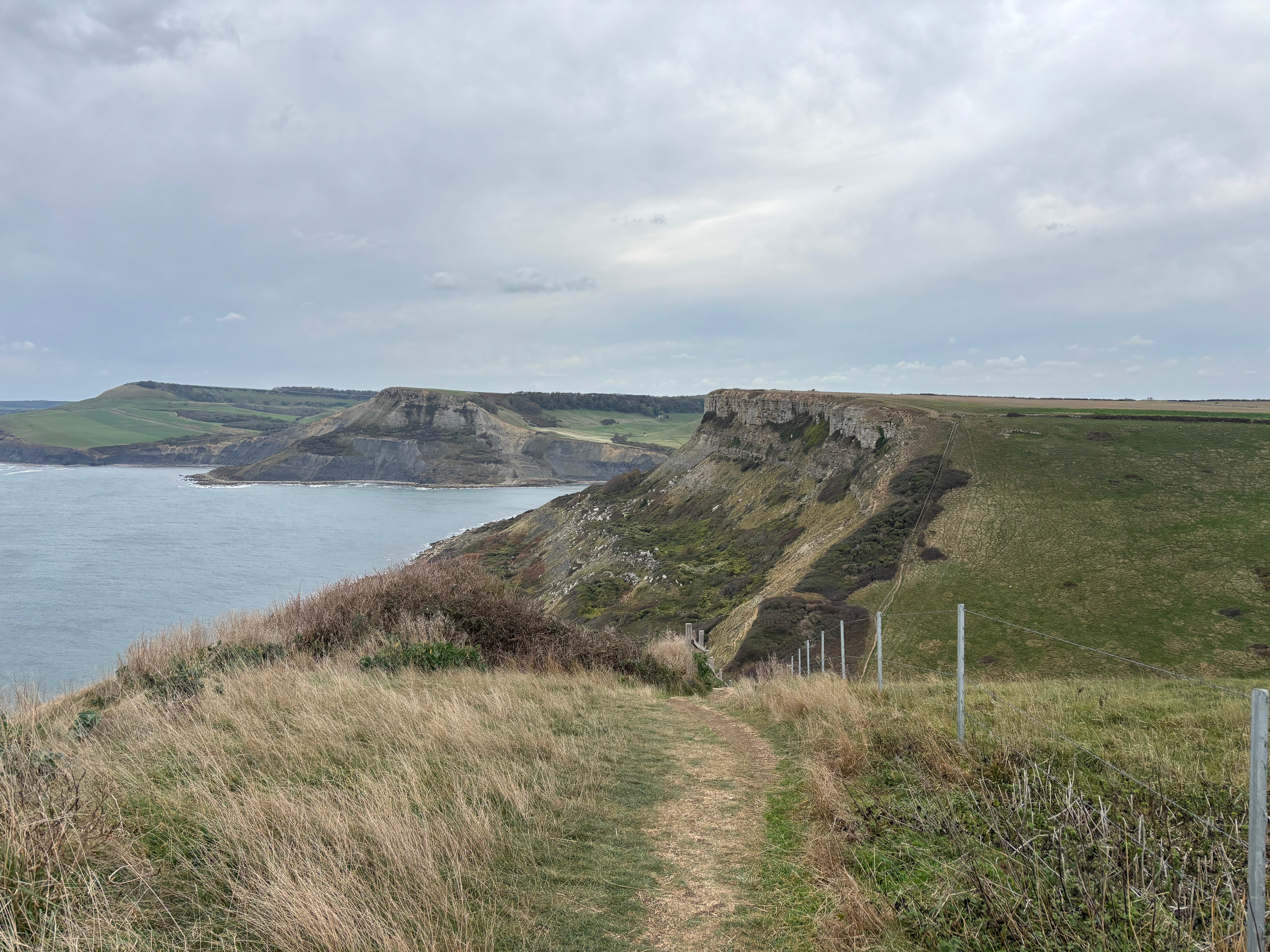
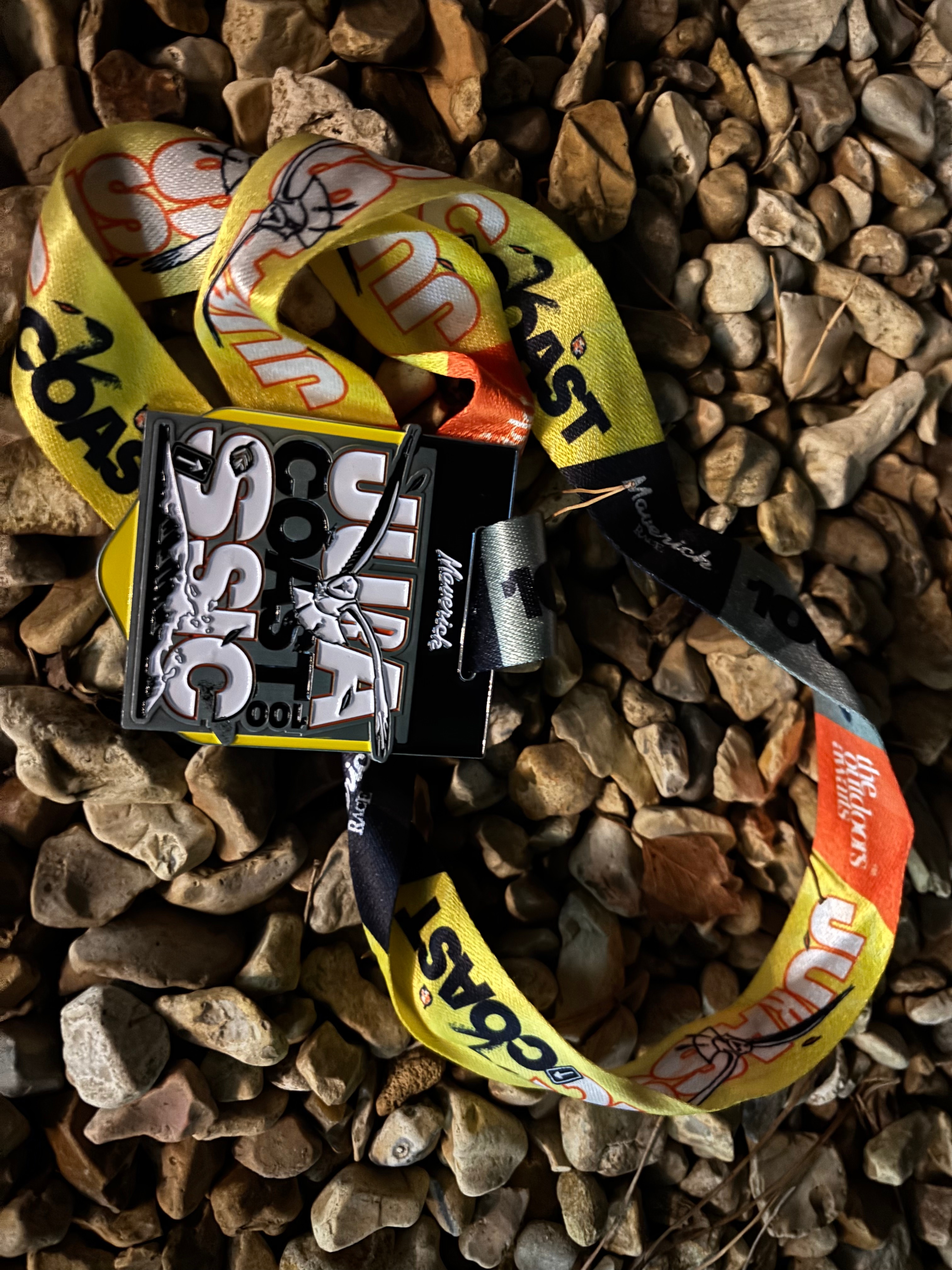
The Maverick Jurassic coast 100 km is a point-to-point race that takes place on the Devon coast. It starts at Hardy’s monument near Weymouth and travels east along the South West coast path before doing a large loop around Corfe castle.
The Jurassic Coast stretches 95 miles from Devon to Dorset, this UNESCO World Heritage site is famous for its dinosaur fossils from the Triassic, Jurassic, and Cretaceous periods. As well as beautiful stretches of coastline.

The weather conditions were perfect. There had been no rain the week prior, the sky was overcast and it was cool, but not cold.
I completed the course in 12 hours and 17 minutes. On paper this is a good time for me, especially given the 2,639 m of elevation gain. But there were numerous things that made the race more challenging for me which I think are worth mentioning.
Learnings
- I accidentally skipped breakfast on race morning. Not ideal. I’ve had a string of gastrointestinal issues in recent races—likely from overdoing carb-loading—so skipping the meal didn’t seem like the worst thing at the time. I also knew I’d be taking on nutrition soon after the start. Physically, I’m not sure how much it affected me. Mentally, though, it was an unnecessary weight to carry—an avoidable “what if” that lingered in the back of my mind.
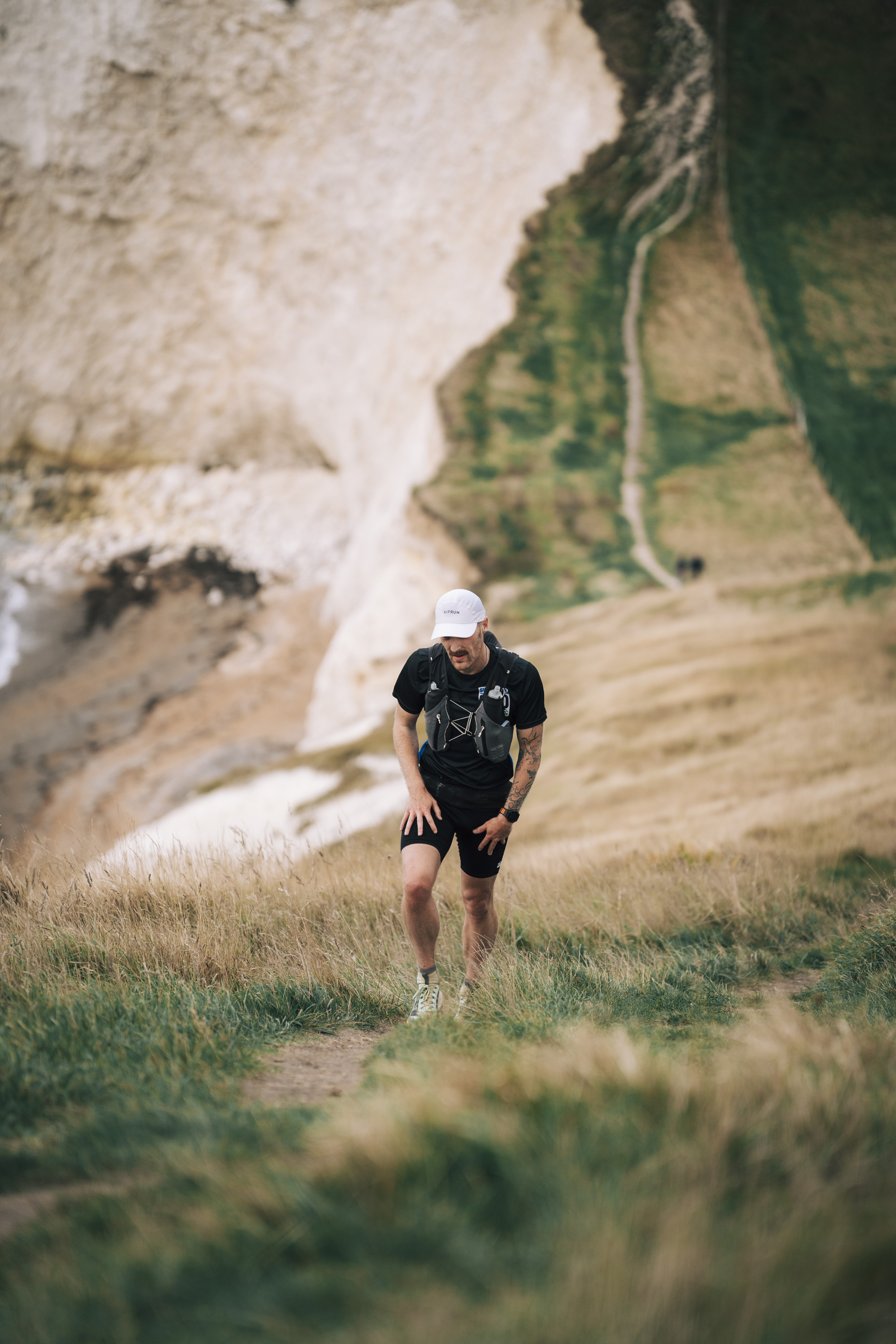
- I went out to fast. Yes, one of the most basic rules of long distance ultras. In recent races I have managed to find a faster pace that I can comfortably stick with for the first half marathon or so, before winding back the pace gradually in a controlled way. But this was just too fast. My average pace was around 5:30/km, but there were numerous kilometres at 4:30/km. The bonking feeling came quickly and it took me a while to recover.
- I had gut pain. This has happened a few times recently, and forced me to DNF the Race to the stones 100k race this year. If I eat too much the day before a race and don’t manage to have a bowel movement, then I get a painful gut. Luckily I was able to alleviate this relatively early in the race this time, and I thought not eating breakfast before the race would have helped to prevent this issue, but it did still come, although not as bad as in previous races.
- I slept in my car the night before the race. I don’t usually expect much sleep the night before a race, and I think I got a few hours regardless. But I hadn’t practiced sleeping in the car previously. I have experience sleeping in very rough conditions, having completed the legendary Marathon des sables, and I woke up feeling quite awake. But I expect I could have bagged more sleep and felt less stressed about this unknown. Generally, though, it was a great way to sleep before a race, and I will definitely do this again.
- I did not recce the course. Another classic mistake. But alas, we can’t always recce every single race. It cannot be understated the huge psychological impact recceing a course brings, even if sub-consciously. But also, in retrospect, I would have taken my poles with me had I known there would be so many steep, un-runnable, climbs.
The positives
- I did not need to use a drop bag. I did carry a change of top and hat in my backpack, but I only ended up changing the hat. In hindsight, I’m glad I didn’t rely on a drop bag — it saved time and reduced the temptation to stop for too long halfway through. For many runners, drop bags become an excuse to take a prolonged break. For me, they’re starting to feel more like a distraction than a necessity.
- Aid station stops were very quick. I’ve gotten much better at treating aid stations as what they are: quick pit stops. I usually skip the first one or two altogether, or just stop briefly to top up water. From there, I keep all stops under 3–4 minutes, often much less. The more of these races I do, the easier it becomes to keep moving — mentally and physically. Momentum is everything.
- Simplified nutrition strategy. Nutrition has been a major work in progress, but I’m getting there. I now stick almost exclusively to PFH90 gels, taking one per hour, and water. From the halfway point, I’ll add around 300ml of Coke and occasionally a few salty crisps or a bite of banana. I’ll also take pain relief and one PFH electrolyte tablet at this point. It’s minimal, predictable, and easy on my gut — and it’s working.
- I maintained my pace. After recovering from the initial sprint start, I did manage to maintain a fairly consistent pace, and where previously I would always walk all hills, I am now finding myself running most of the runnable ones.
Gear
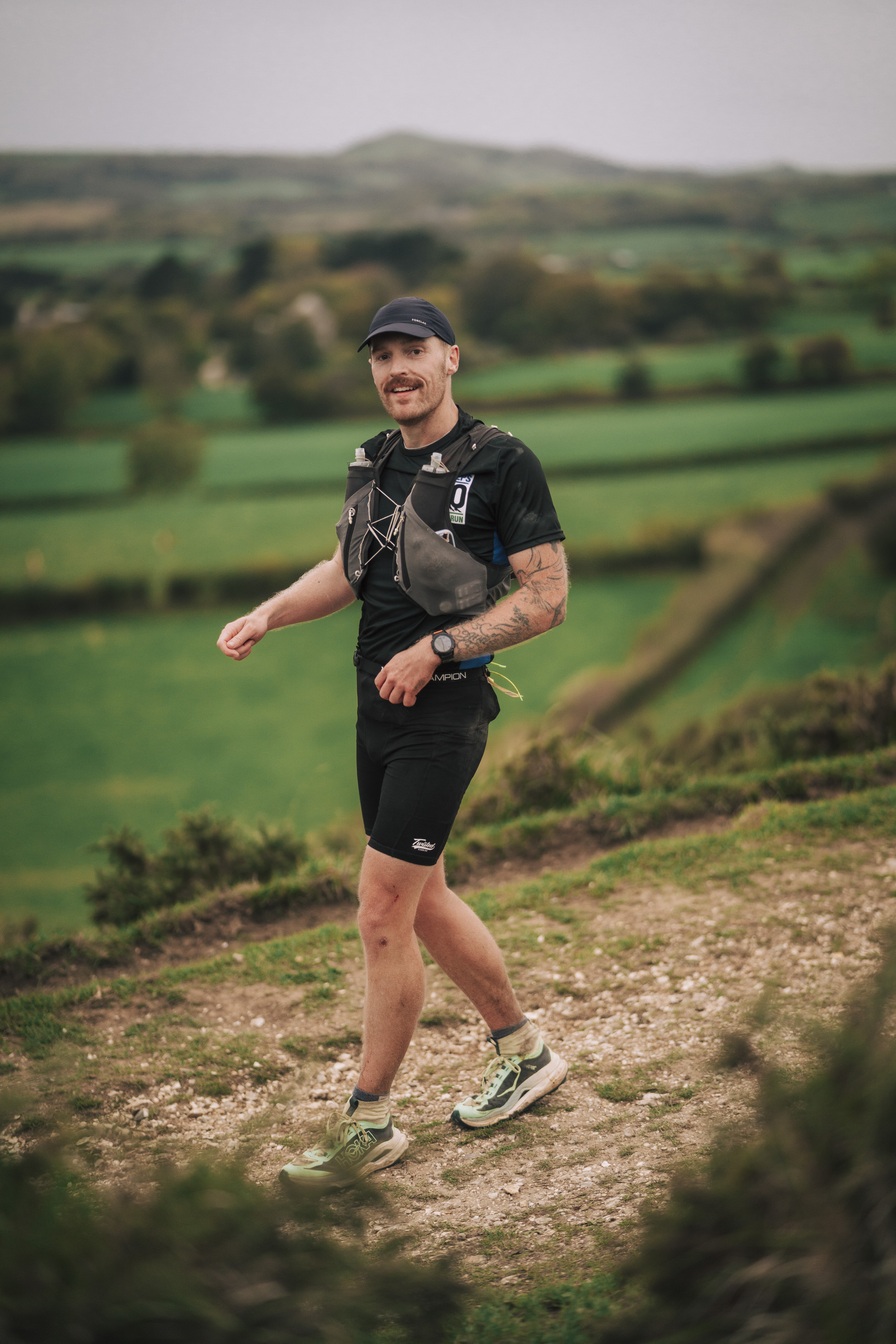
I wore the HOKA Tecton 3; a comfortable and fast shoe but with little grip. I was lucky that the trails were bone dry, otherwise I would have been slipping all over the place.
I used the Twisted half tights with built-in waist belt for storing my gels.
Salomon Advanced skin 12 hydration vest.
In conclusion, as I alluded to earlier, yes I completed this race (my 11th at this distance) in 15th place and in around 12 hours, but I think I could have performed much better. I think I am capable of a sub-11 hour 100km when all the pieces fit together.
 Chris runs ultras
Leave a comment