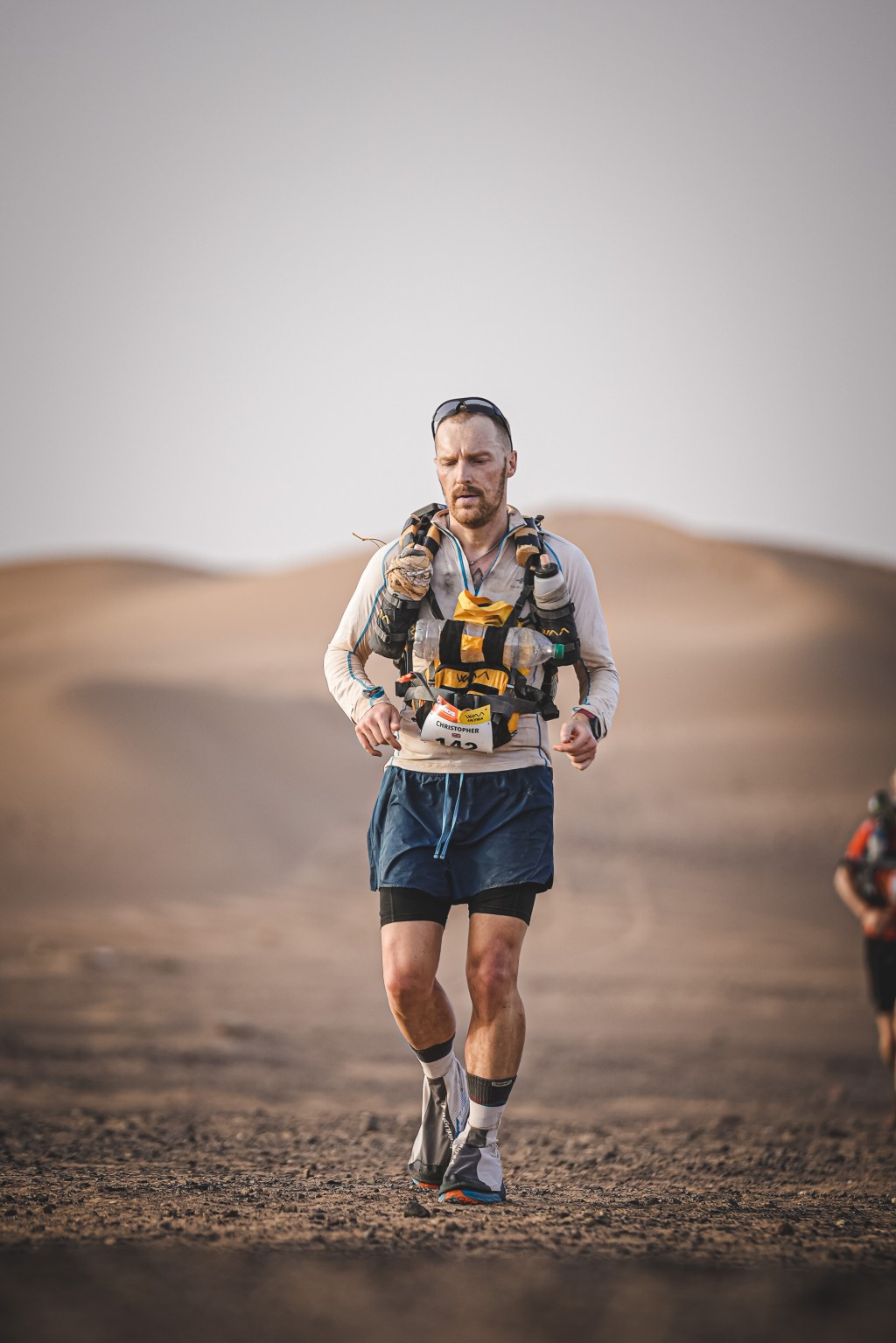
Arrival at the Marathon des Sables
The journey to the legendary Marathon des Sables (MDS) began at Heathrow Airport, where a chartered flight, exclusively for participants, awaited.
The presence of MDS staff at the airport added a reassuring touch, ensuring a smooth start to the adventure. Their guidance continued as we landed in Ouarzazate, where they met us once again and directed us onto the waiting coaches.
The drive from Ouarzazate to our first camp took approximately three hours, with a brief but much-needed stop along the way. As we approached the desert we had to wait for an escort to guide the coaches safely across the shifting sands. This was crucial to prevent the vehicles from getting stuck—a reminder of the challenging terrain that lay ahead.
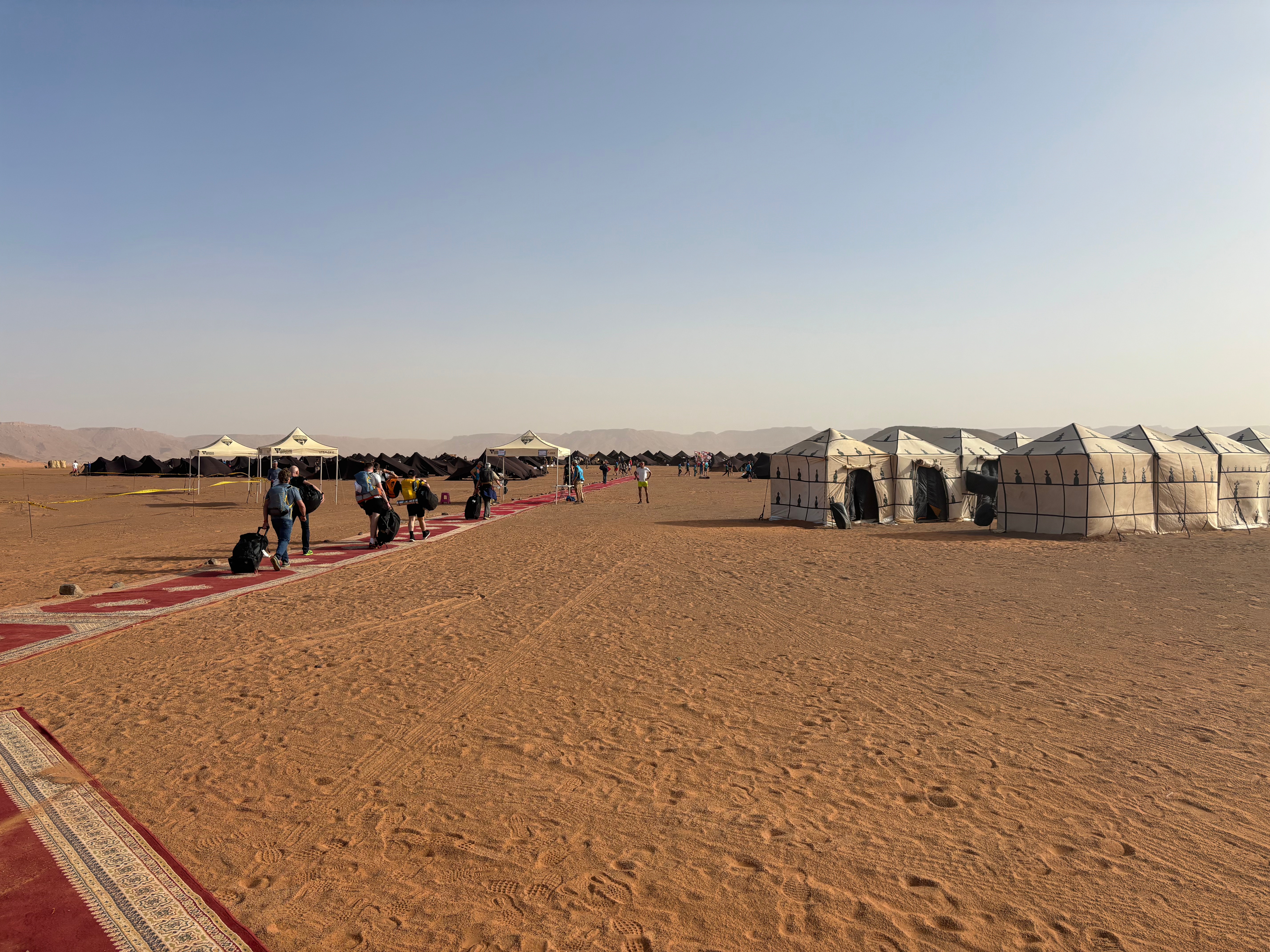
Stepping off the coach at our destination felt surreal. The sight that greeted us was extraordinary: a red carpet made of rugs, leading us into the heart of the desert camp. A row of traditionally dressed tribesmen stood alongside, singing and playing instruments, immersing us into the rich culture of the region.
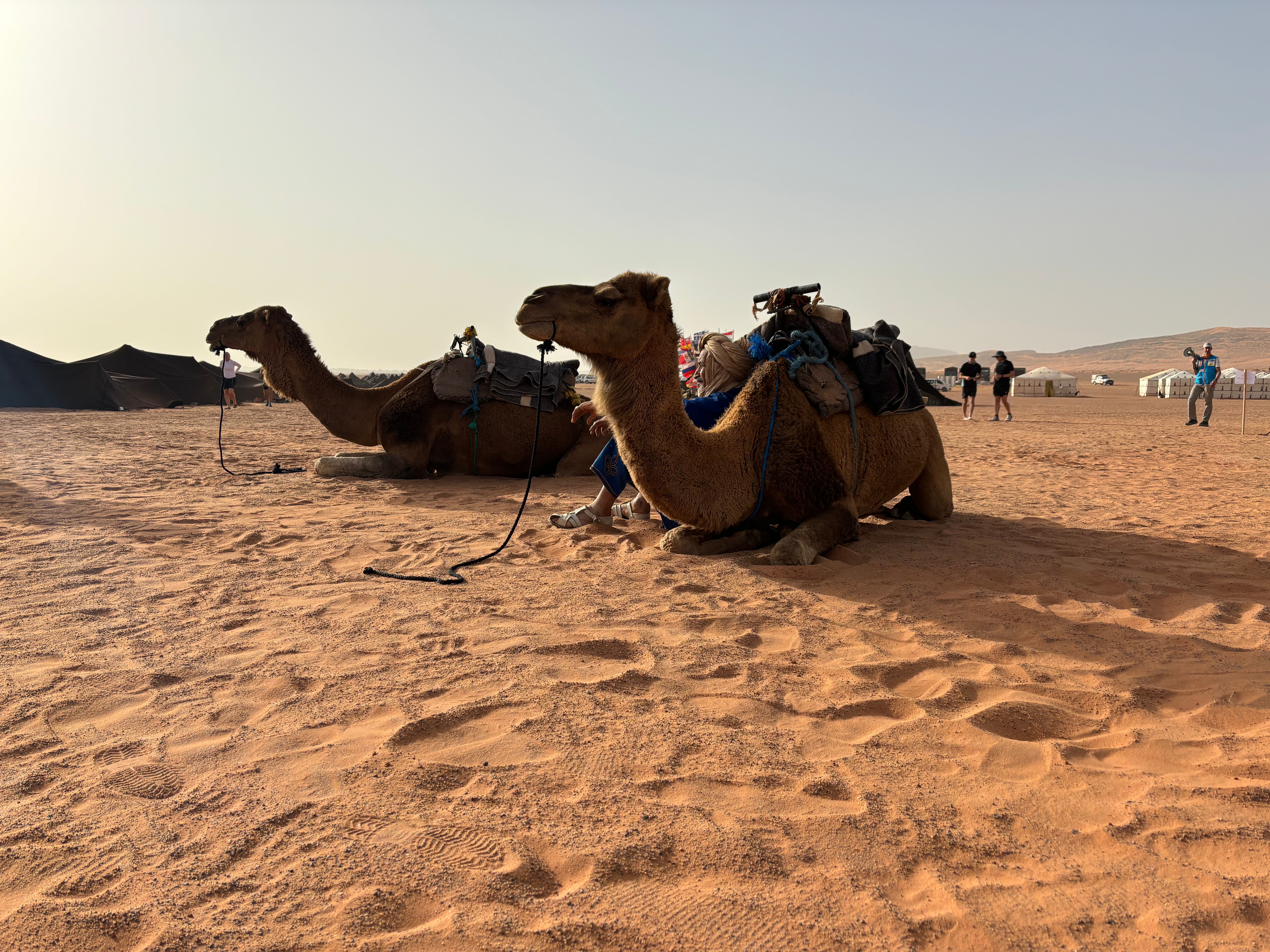
The music, the setting, and the sheer remoteness of the location created an atmosphere that was both magical and deeply emotional.
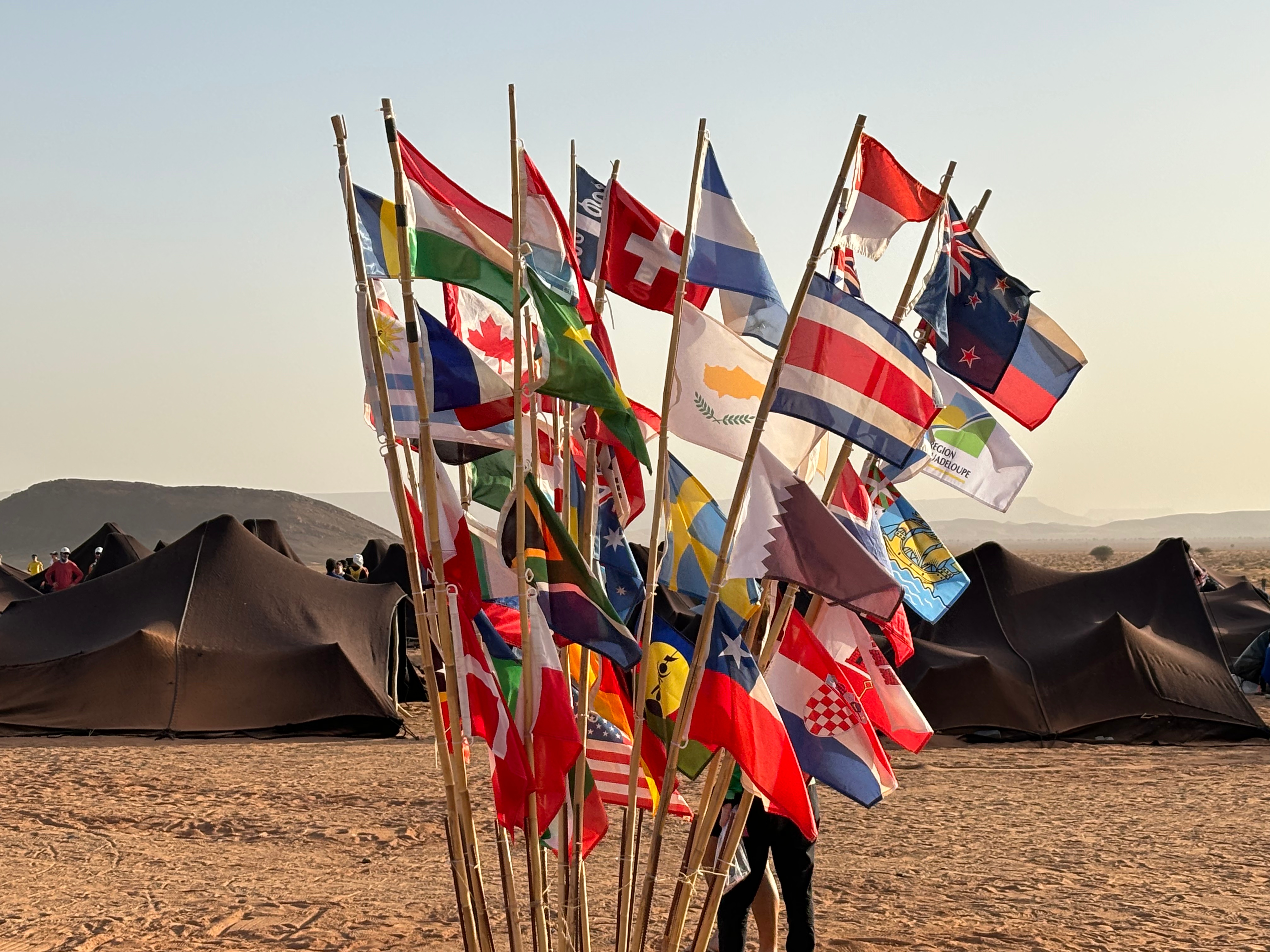
Upon arrival, I was handed a 5-liter bottle of water—an essential resource for the days to come. I then made my way to my tent, which I would share with seven other men for the week.
The reality of the adventure was beginning to sink in: we were here, in the middle of the desert, about to take on one of the toughest footraces on Earth.
The Legendary Experience
The Marathon des Sables is an experience that defies simple description. Rather than attempt to capture it all, I’ve gathered a few of the more salient moments—snapshots of the highs, the lows, and the unexpected.
I don’t want to overshare or diminish the experience for potential competitors, and, of course, I want to respect the race itself. But these moments, I hope, offer a glimpse into what it felt like to take on one of the toughest footraces on Earth.
Admin Day: Embracing the Challenge
I had expected a restless first night, but to my surprise I slept well and woke with my tent mates just before sunrise. Perhaps it was because I had already accepted that sleep would be difficult, making it easier to relax. This, I believe, is a useful mindset for the entire MDS experience—embrace the discomfort rather than fight it. The experience itself is the challenge, not just the running stages. The quicker you accept the discomfort, the smoother the journey will be.
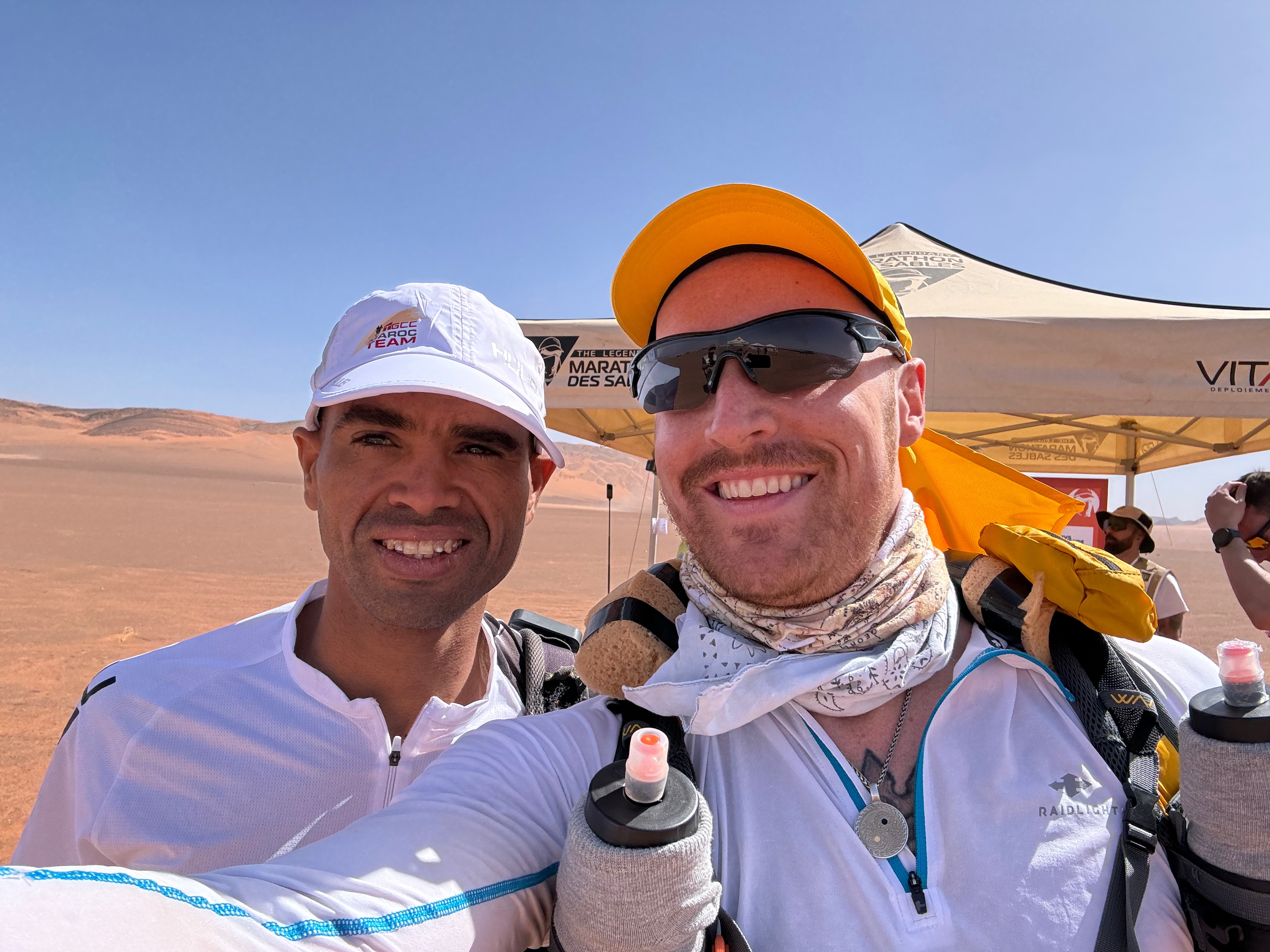
This year, a welcome change in schedule meant we didn’t have to stand in long queues under the sun. Instead, a staff member came to collect us from our tent when it was our turn for our kit to be checked.
The process was impressively efficient—my bag was weighed, a couple of essential items were checked and within 20 minutes I was fully registered and ready to go. It was a smooth, well-organized start to the adventure ahead.
Creature comforts
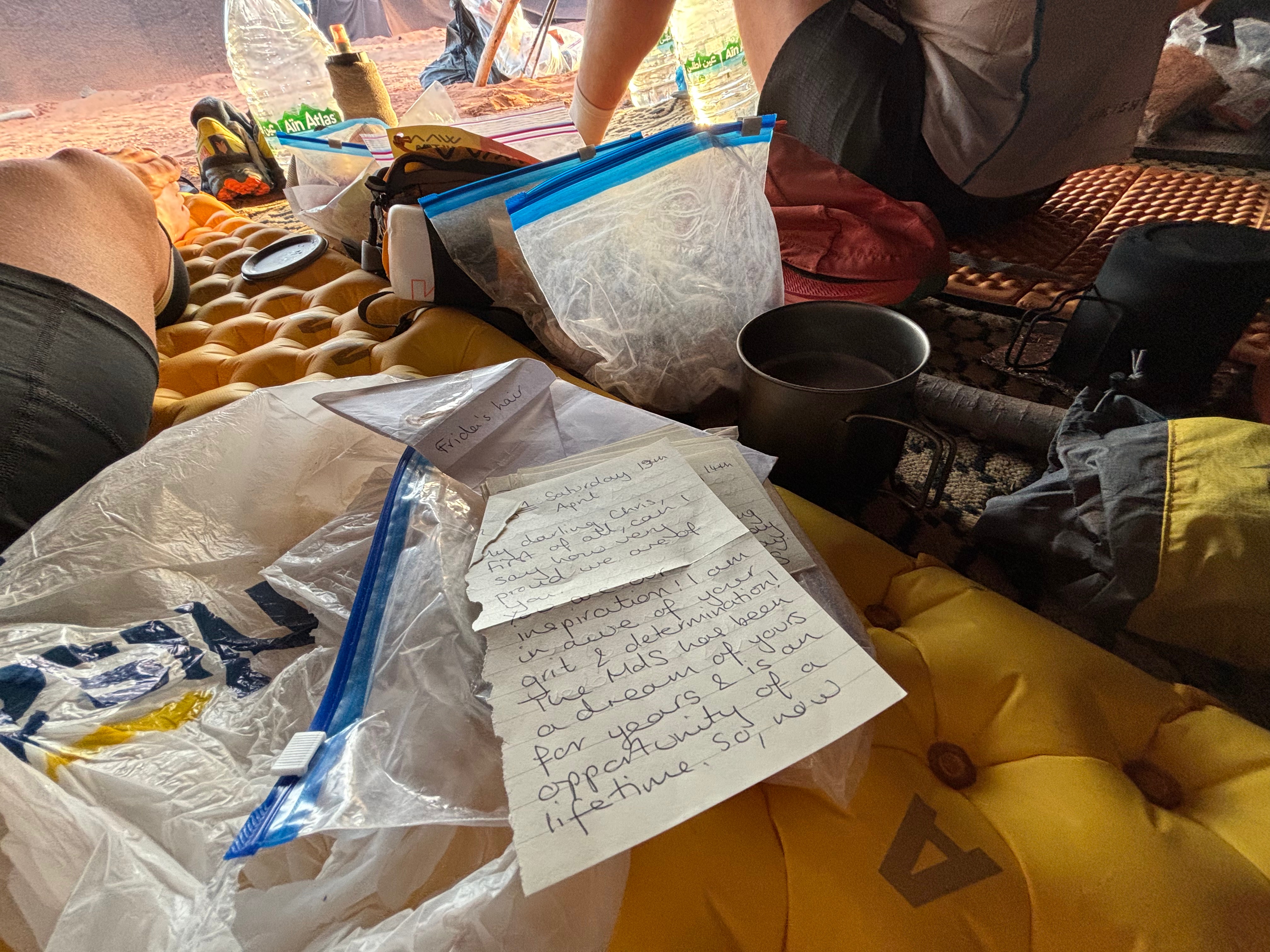
Reading my daily letters from my partner helped so much. I read most of my letters aloud to my tent mates, and didn’t hold back the occasional tear.
It’s easy to disregard sentimental things when you have to consider the weight of your backpack, but try to take at least one thing that will comfort you in some way, it’ll make the world of difference, and might be the difference between completing the challenge or not.
A Night of Music and Connection
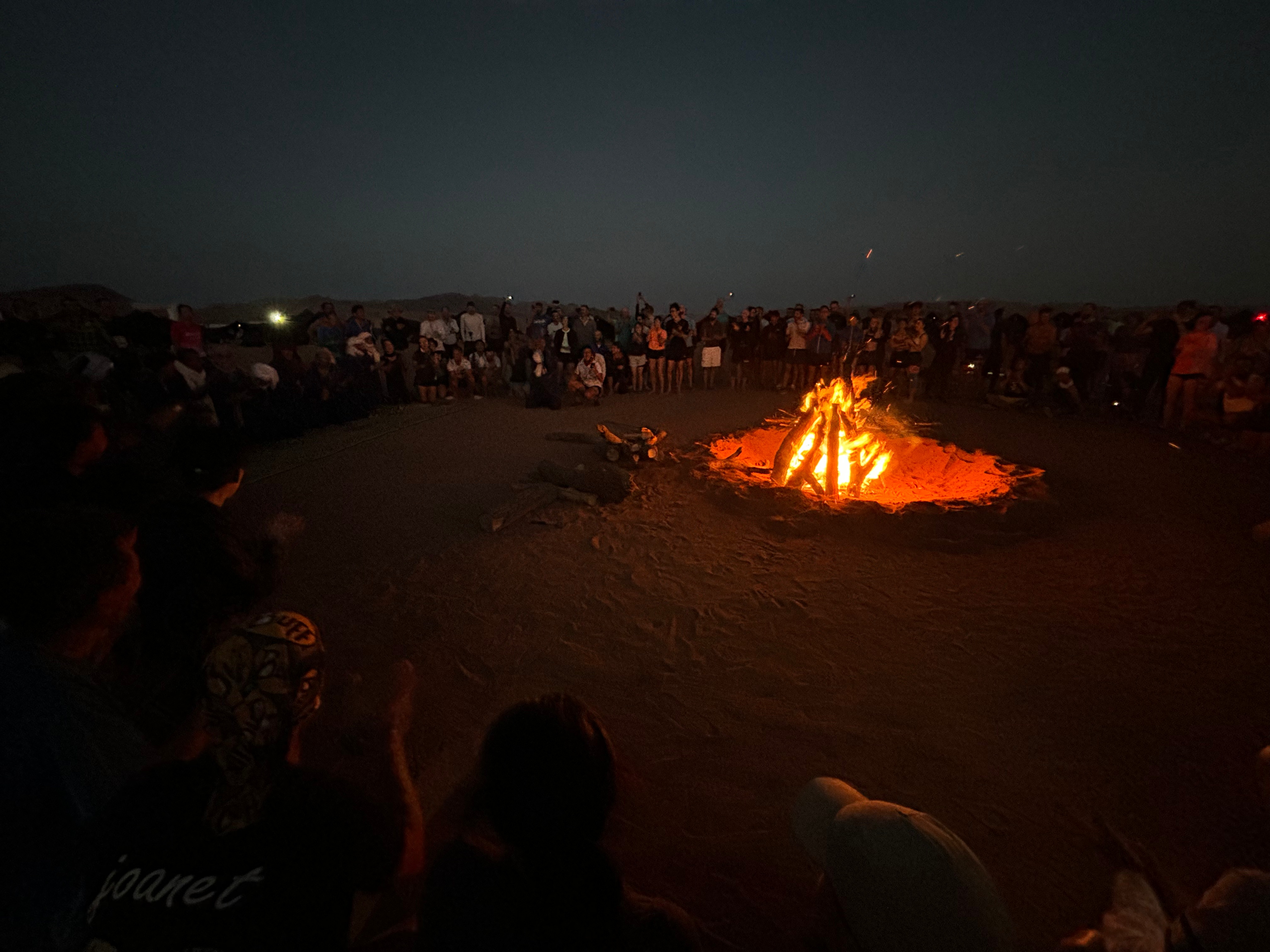
A few days into the experience, the local porters lit a bonfire in the middle of the camp and began singing and dancing. At first it seemed like they were doing it purely for their own enjoyment, but before long most of the camp had joined in.
The energy was infectious, we were simple people sharing a moment of joy in the desert. These unexpected, spontaneous moments helped to elevate the experience beyond just the challenge of the race itself.
The desert beyond sand
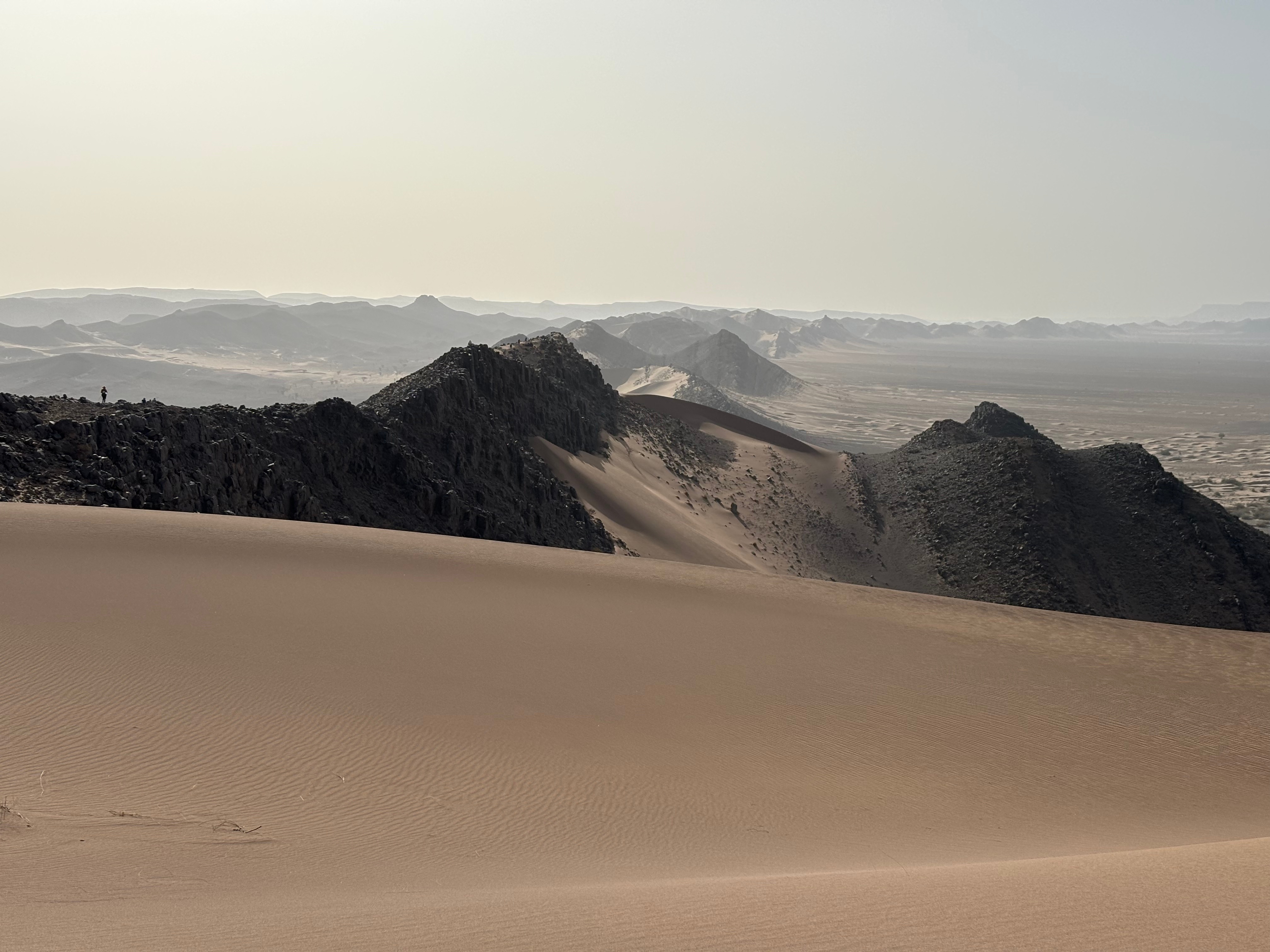
One of the stages led us across a rugged mountain range, a stark contrast to the dunes we had come to expect. As I climbed higher and followed the ridge line, the views became truly extraordinary—otherworldly, even. It felt as if I had stepped onto another planet.
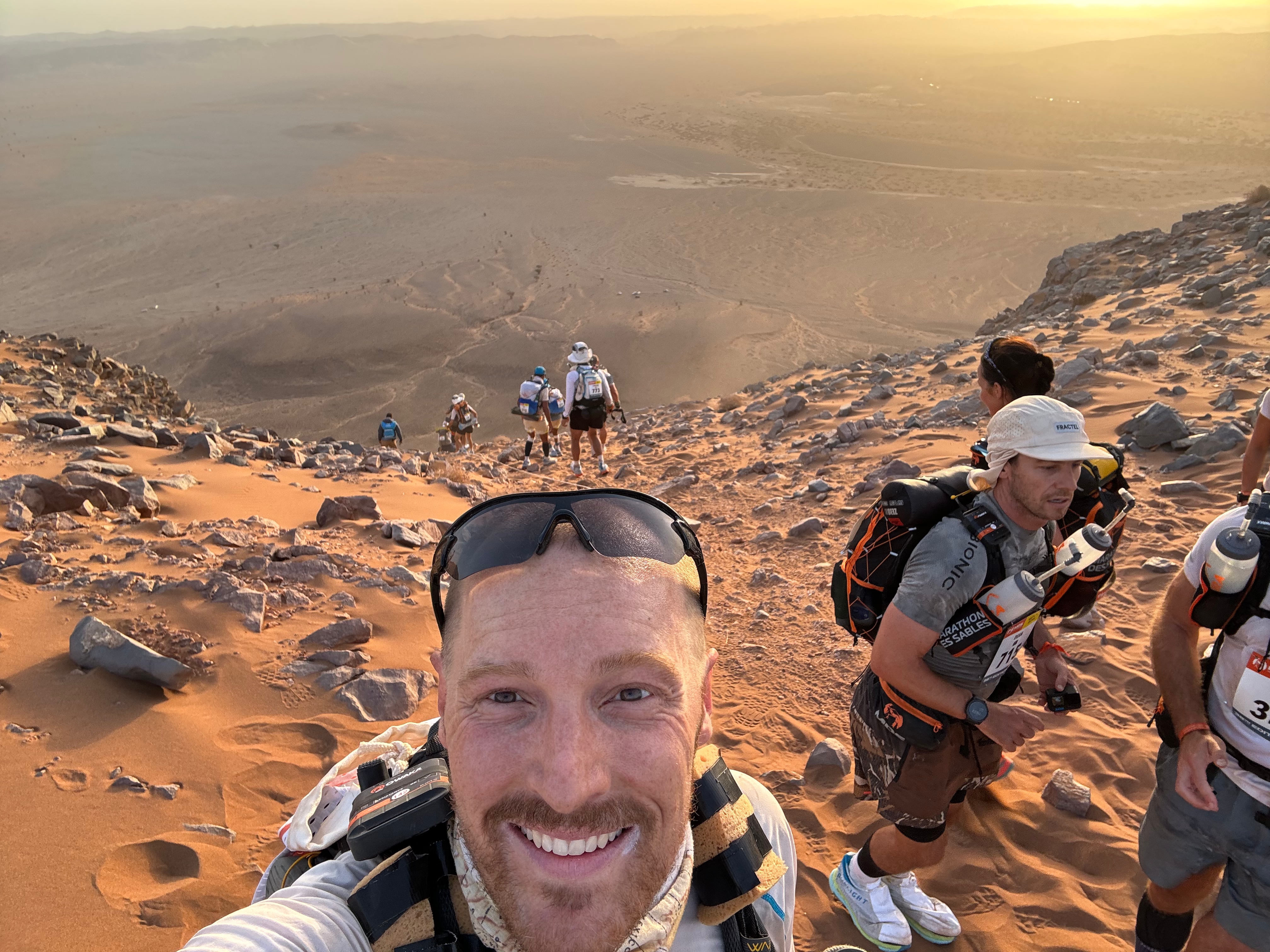
As far as my eyes could see, there was nothing but raw, untamed natural beauty—brutal yet breathtaking, harsh yet mesmerizing. It was a moment of pure awe, a reminder of how wild and untouched some corners of the Earth still are.

The double marathon stage
The third stage of the Marathon des Sables is a brutal 86 km stretch, spanning two days.
I remember feeling confident on the morning of stage three. A 100 km run is nothing new to me—I’ve completed that distance non-stop in respectable times. This should have been my moment to make up ground on other competitors. This should have been where my experience paid off.
But, of course, this was unlike any stage I’d ever encountered before.
My body was already weak and sore. The relentless heat and unforgiving sun drained me faster than I expected. No matter how much I tried to push, I just couldn’t get my body to perform the way I wanted it to. The attrition of the previous stages had taken its toll. It didn’t take long to realize that simply completing this stage would be a struggle—let alone finishing in a respectable time.
I vividly remember hitting a wall of sand at around 70 km—16 hours in (yes, 16 hours to cover 70 km). The massive dune ahead seemed insurmountable. Step by step, I inched my way up, battling exhaustion with every movement. It was in that moment that I truly understood the genius of the race design. This was the stage meant to break people. And it had broken me, multiple times. I was forced to stop and rest at various points, physically unable to go on.
When I finally reached the last checkpoint at 76 km, I collapsed, completely spent. Lying there, I felt an exhaustion deeper than anything I had ever known. I had no idea how I would continue. My body refused to move. My mind was blank with fatigue.
But after some encouragement from the checkpoint staff—and two sachets of hot chocolate, roughly 2,000 calories—I pushed myself up and stepped into the salt flats.
From 76 km, I could see the lights of the camp in the distance. For the next two hours, I, along with the other competitors around me, trudged forward in a relentless death march.
At one point, I began dozing off while walking. I hadn’t listened to music at all during the race, but in that moment, I needed something—anything—to keep me going. I put my phone on loudspeaker and let the music fill the empty desert air.
The sky stretched endlessly above, a vast expanse filled with the shimmering stars of the Milky Way.
Finally, after 21 hours and 16 minutes, I stumbled back into camp. This stage had broken me completely—physically, emotionally, and mentally.
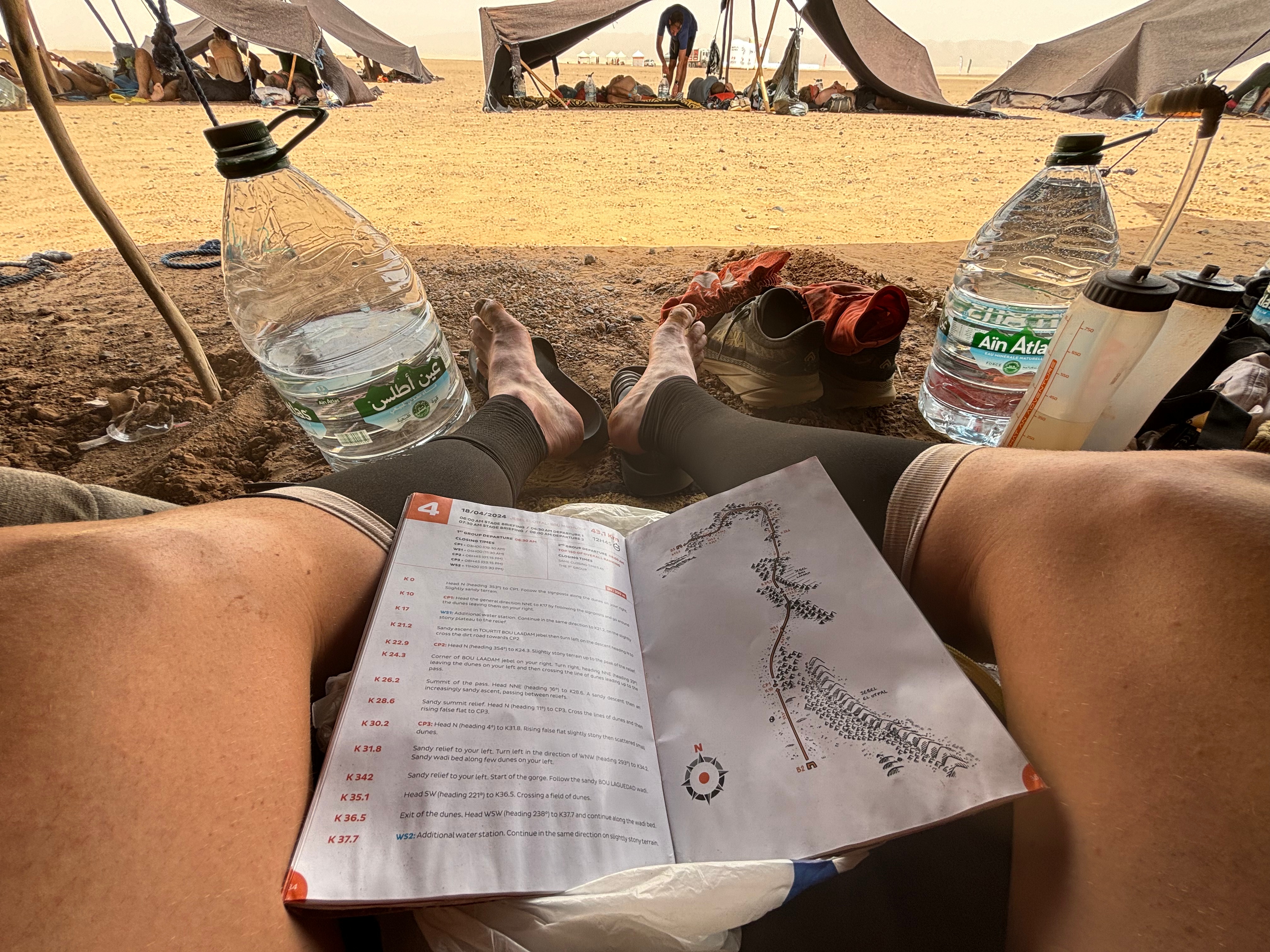
The camp felt different today, it was subdued. Most competitors kept to their tents, each trying, in their own way, to piece themselves back together. Silence hung in the air, broken only by the occasional murmur of conversation or the rustle of shifting bodies. Like me, they were questioning their ability to step up to the start line of stage 4—the marathon of salt flats sand dunes.
The heat in the dunes
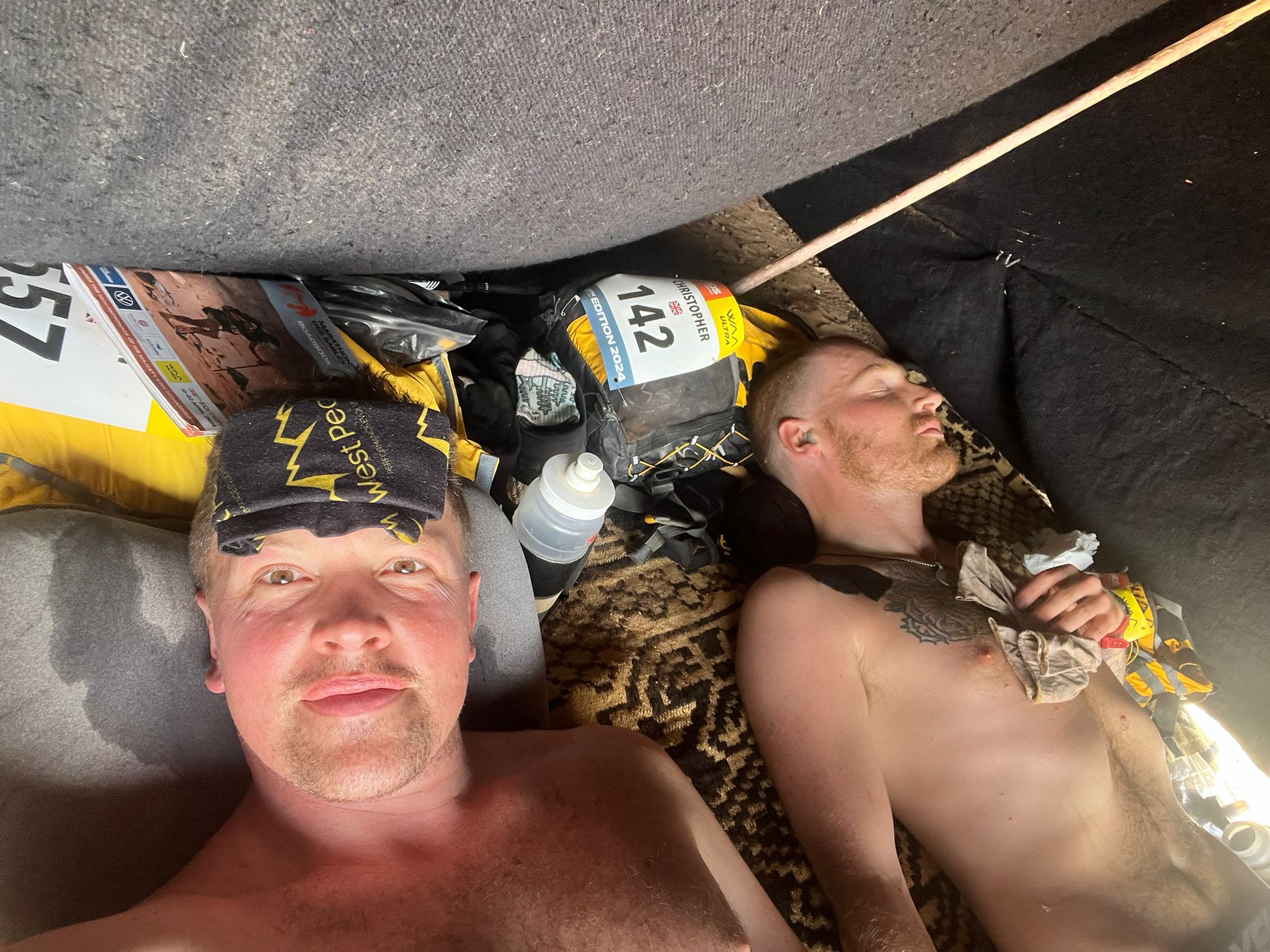
For the most part, stage 4 went well. I teamed up with the two army blokes from my tent, Alex and James, and spent the first 30 km run-walking and getting to know them—a massive highlight of the day.
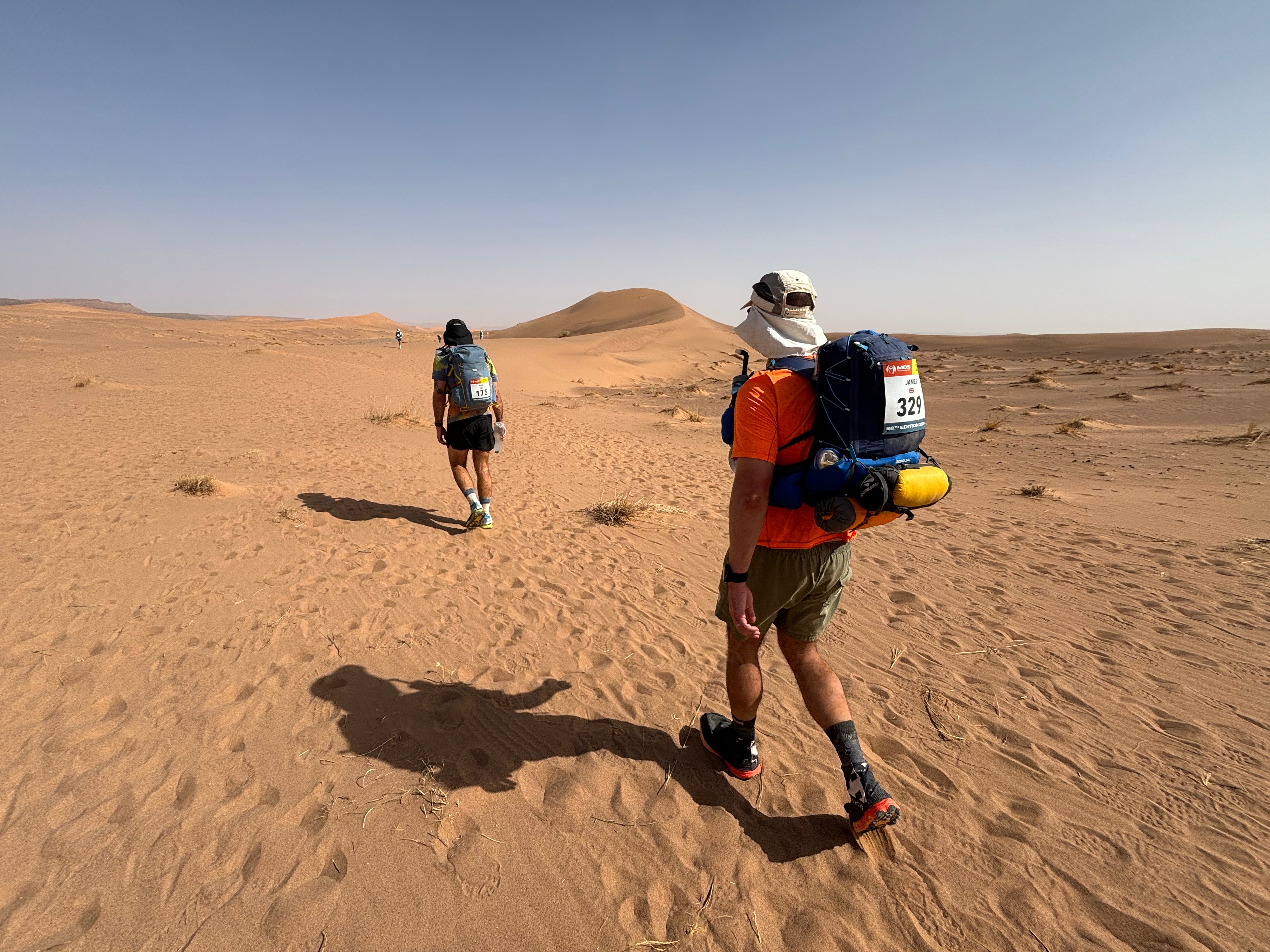
At around 30 km, however, I found myself alone, running through a valley of sand dunes for about 3 km. The air was completely still—hot, heavy, and suffocating. With every step, it felt like the heat was wrapping around me, draining my strength. By the time I emerged from the dunes, I could feel the early symptoms of heat stroke creeping in.
When I reached the final checkpoint, the staff could immediately tell I was in a bad way. Right on cue, I started dry retching and felt very dizzy, on the verge of passing out. They quickly helped me force down 500 millilitres of water mixed with an Oxo cube for electrolytes and held ice against the back of my kneck.
Unfortunately, this checkpoint also came with a less pleasant remedy—a thermometer up the bum. The reading came back at 38.5°C, which seemed to satisfy the medic. After about 30 minutes of rest and rehydration, I started to feel much better. I thanked the poor French girl who had looked after me and set off again.
This was my only real brush with serious heat sickness during the entire week—a reminder of just how brutal the desert could be. But also how well I had managed the heat and sun so far.
Yoga
Completely unexpectedly, there was a yoga class held almost every evening, right in the middle of the camp. At first, hardly anyone showed up, but as the days wore on, more and more competitors joined in.
For me, this became an indispensable part of my daily routine. The combination of stretching and meditation helped to soothe my aching body and calm my mind. Having never done anything like it before, I was surprised by how much I looked forward to each session. I cannot recommend it enough.
Ice cold Coke
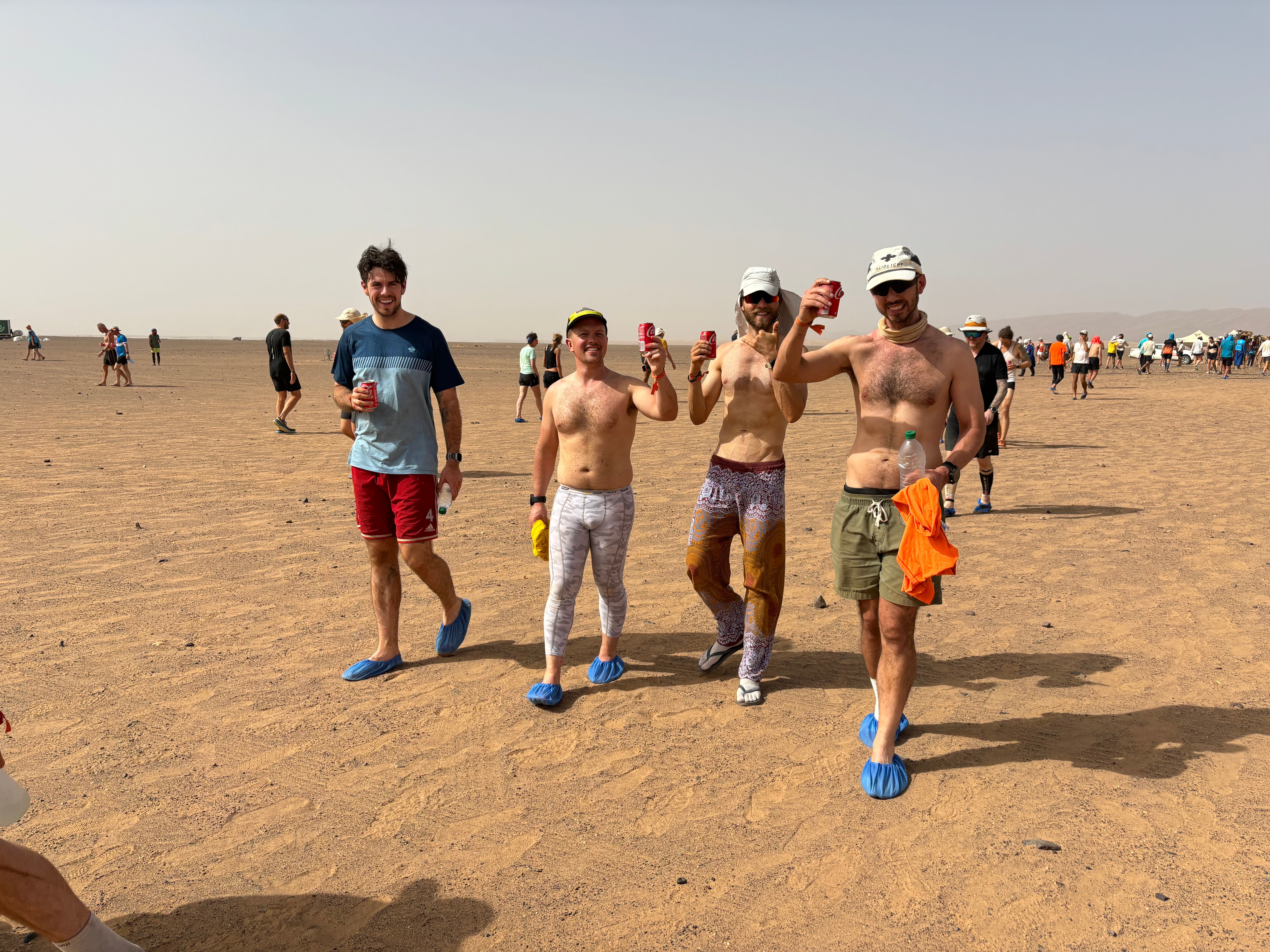
It was after the long stage that a truck carrying a huge stash of ice-cold Coca-Cola cans pulled up near the start line. Within moments, it was swarmed by competitors desperate for a taste of something refreshing.
After days of relentless suffering, that Coke wasn’t just a drink—it was salvation. The sensation of the ice-cold liquid hitting my parched throat, the sharp fizz, the overwhelming sweetness—it was indescribable. It was, without a doubt, one of the greatest things I have ever tasted.
Running out of the desert
The final stage was a relatively flat half marathon. All 8 members of tent 49 had made it to the start line of this final stage. All in different stages of battered and bruised, but all capable of running this stage out.
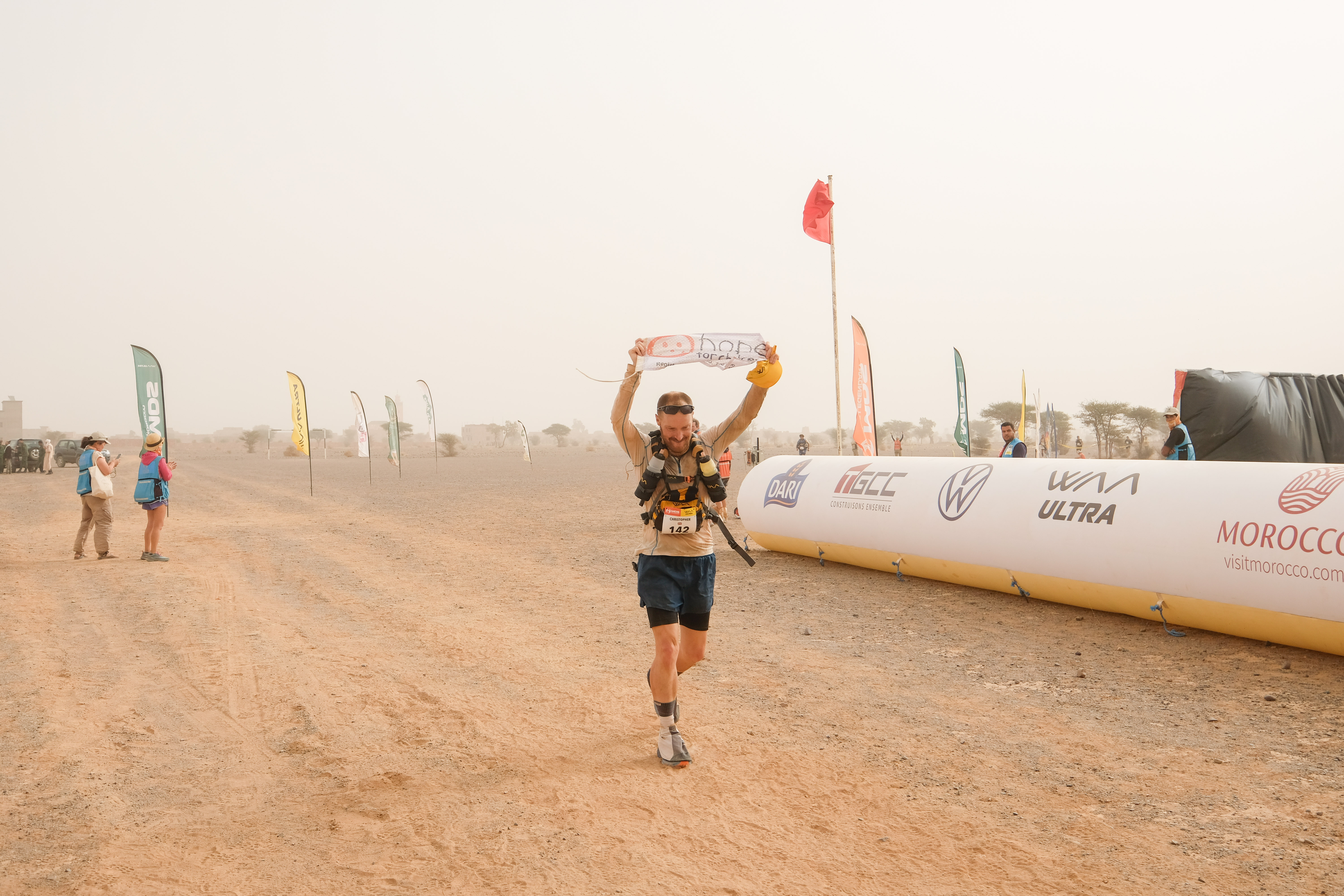
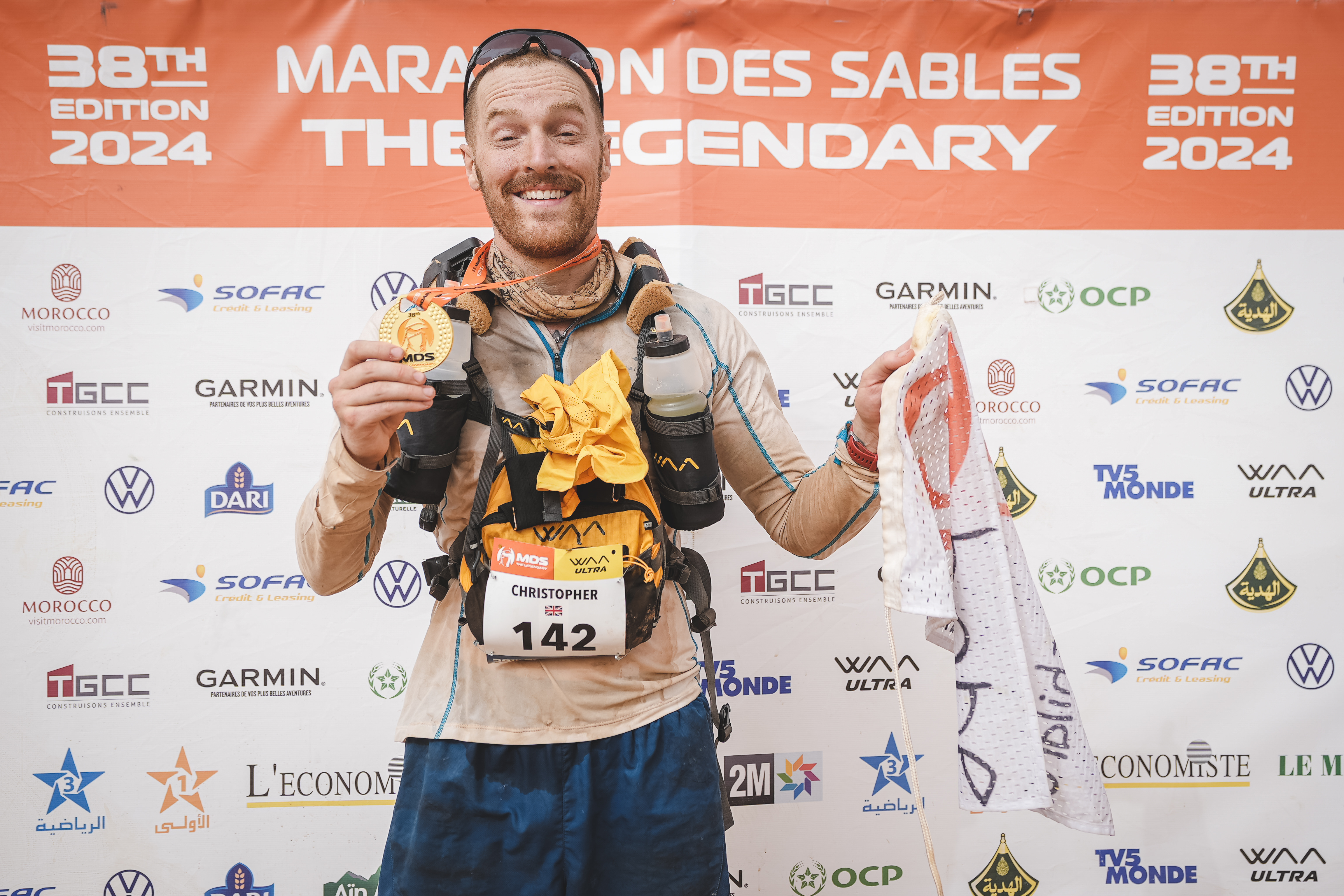
I didn’t know what to expect when I crossed the finish line. But I did get quite emotional. I took the opportunity to hold up a banner of the charity Hope for Children that I, and most of my tent mates, had been raising money for.
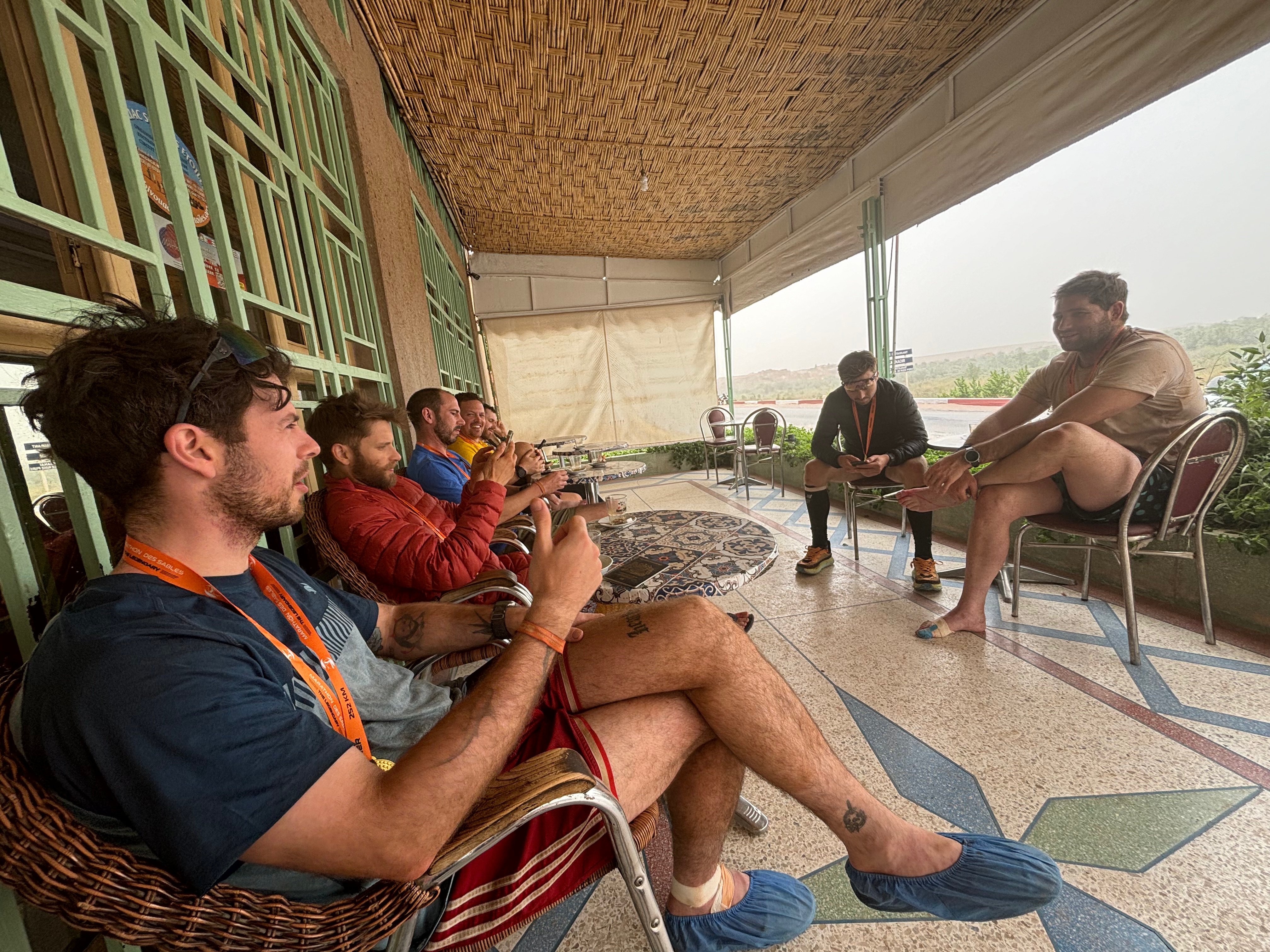
We had hired our own mini van that would be stocked with all manor of chilled alcohol, fizz and sweet and savoury food. Having our own vehicle almost meant we could stop off for a local coffee.
 Chris runs ultras
Leave a comment