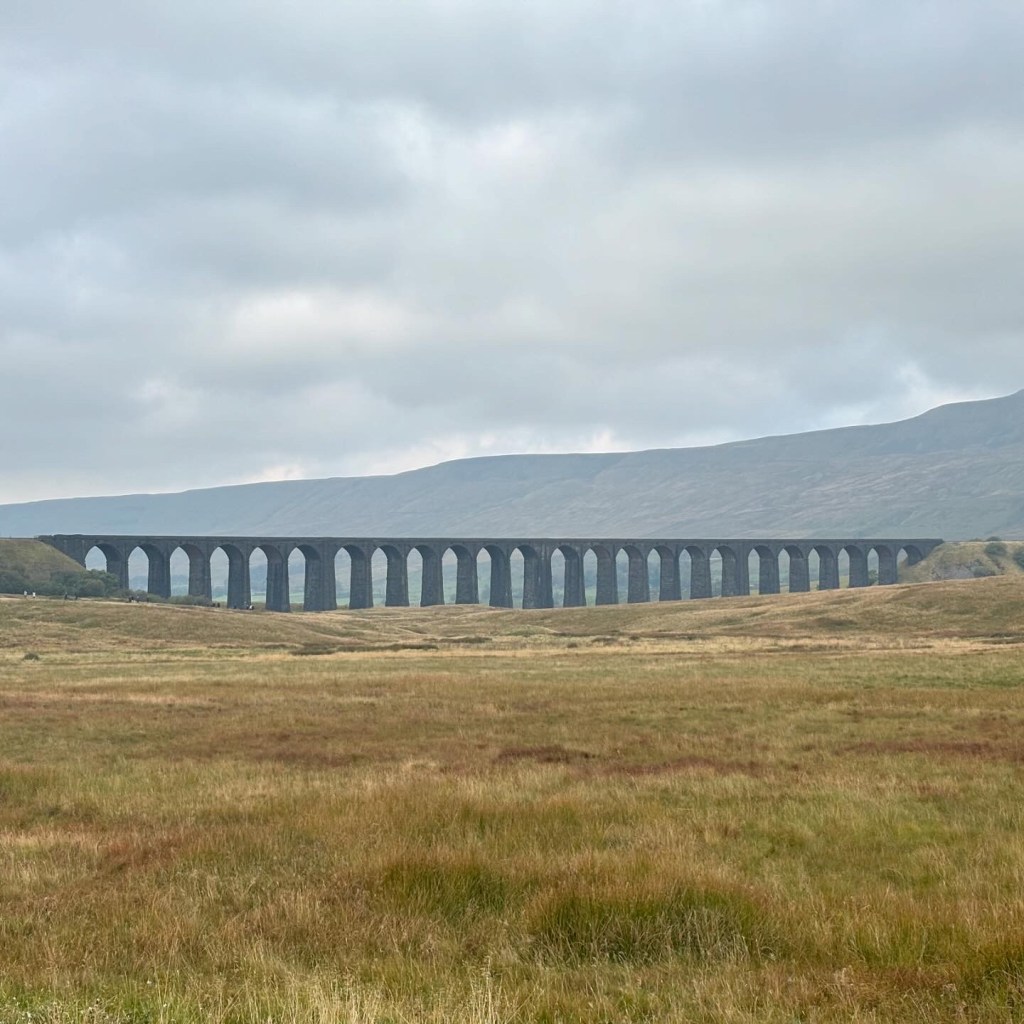
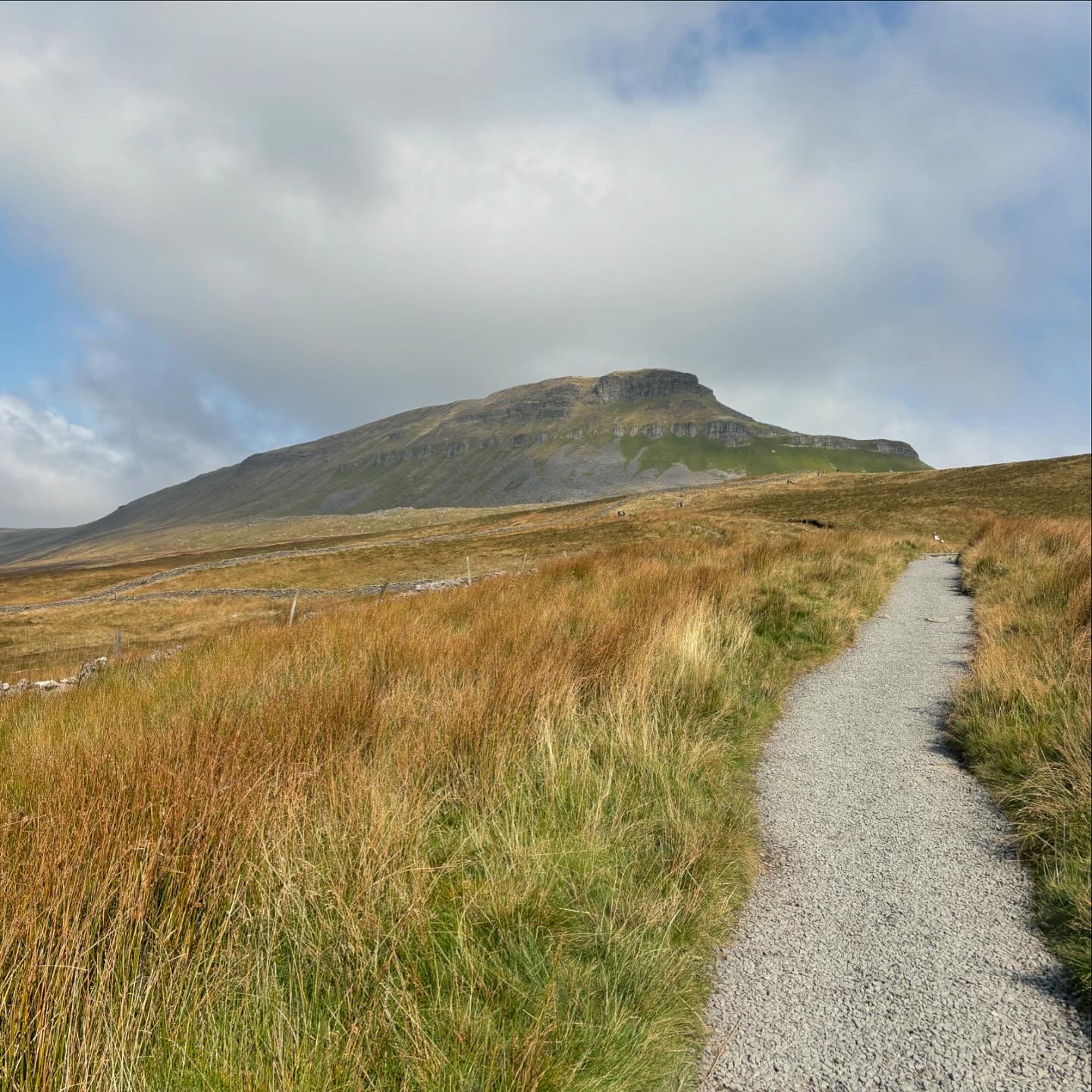
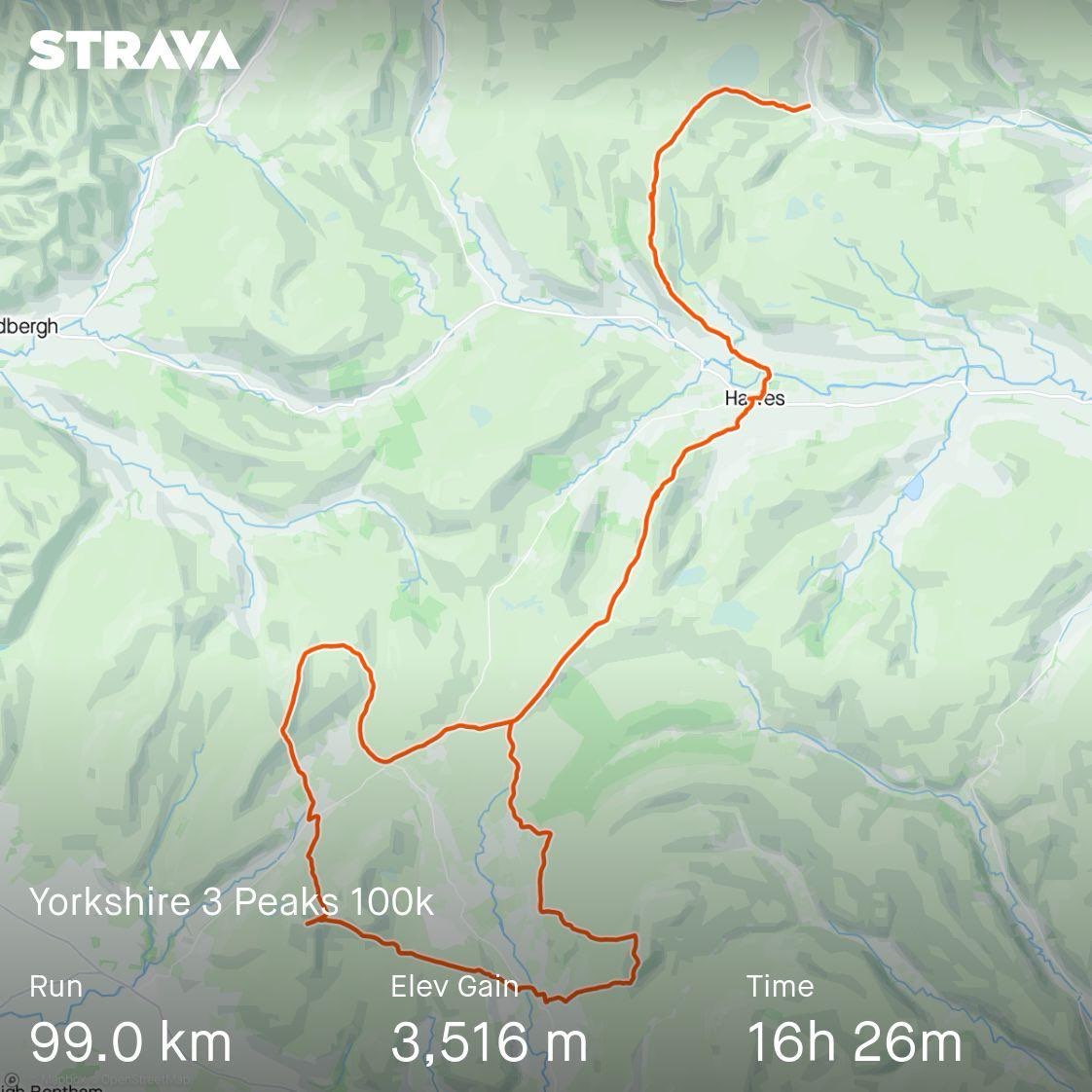
The Yorkshire 3 Peaks 100km is organised by Stu Westfield of Ranger Ultras. Starting in the picturesque town of Hawes, nestled in North Yorkshire, this race challenges you to conquer the three highest peaks in Yorkshire: Whernside (736m), Ingleborough (724m), and Pen-y-Ghent (694m), and also Whitber Hill (427m) twice—once on the way to the peaks, and again on the return leg to the race headquarters in Hawes.
Covering approximately 70 kilometres with a total ascent of approximately 2,500 metres, this course is as breathtaking as it is demanding. The journey through the rugged Yorkshire Dales is not just about endurance; it’s about resilience and mental toughness.
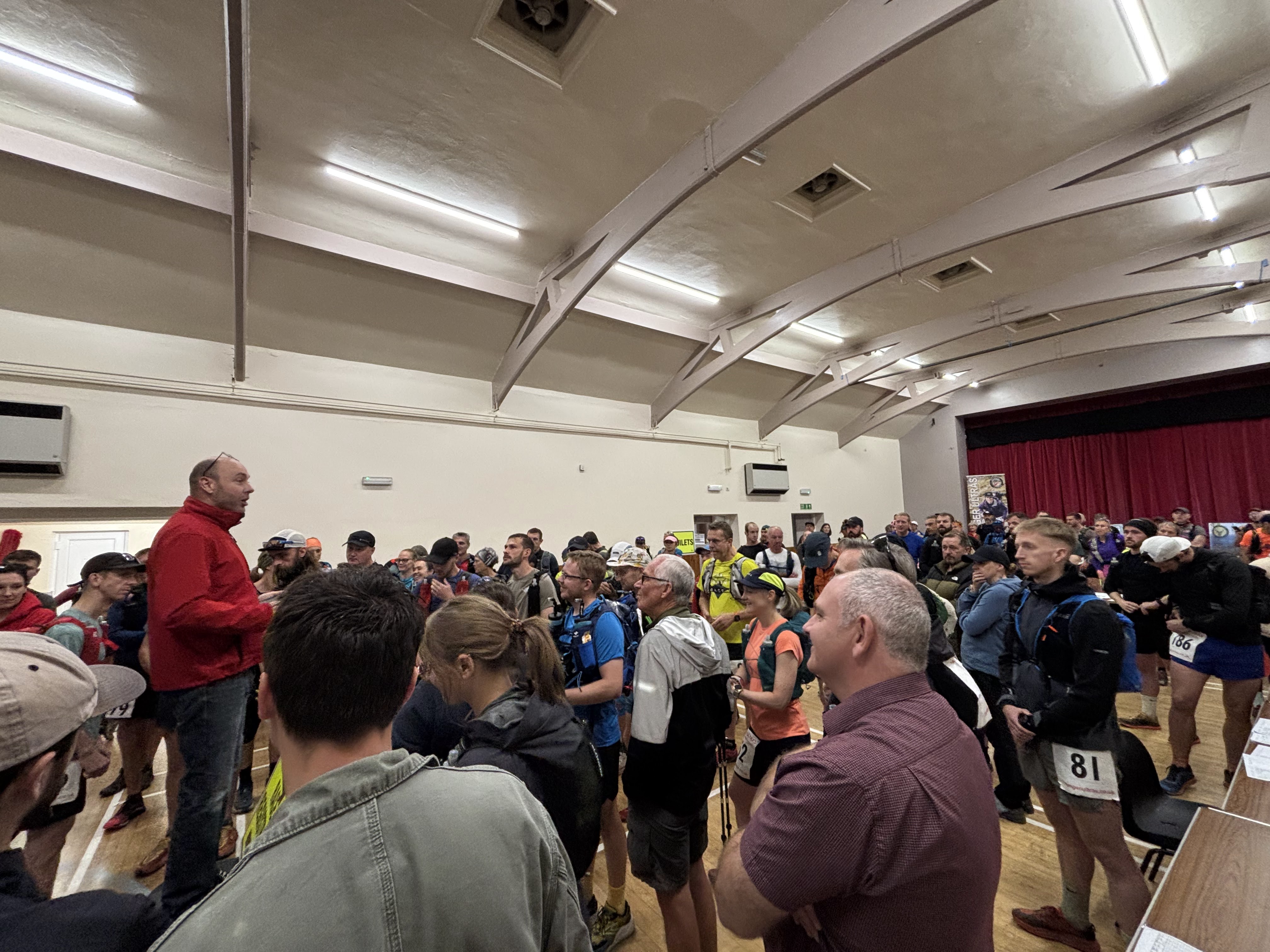
A Race Where Kit Matters
Unlike many ultra races, the Yorkshire 3 Peaks 100km takes kit checks seriously. I almost learned this the hard way. I turned up for the check with a down jacket, thinking it would suffice, only to be told I needed a proper waterproof jacket to meet the race standards. Thankfully, a volunteer named Eddie stepped in and lent me his jacket, saving me from disqualification before I even started.
The Brutal Beauty of the Course
The course itself is a mix of everything. From technical trails, marshland, and fields to concrete slabs and compacted paths, you’re constantly adapting to the terrain. Most of the race is either spent climbing or descending, with only short stretches of relatively flat ground—and a few stretches of road—between the peaks. Each peak presents its own challenge, whether it’s the long, gradual ascent of Whernside or the steeper climbs of Ingleborough and Pen-y-Ghent.
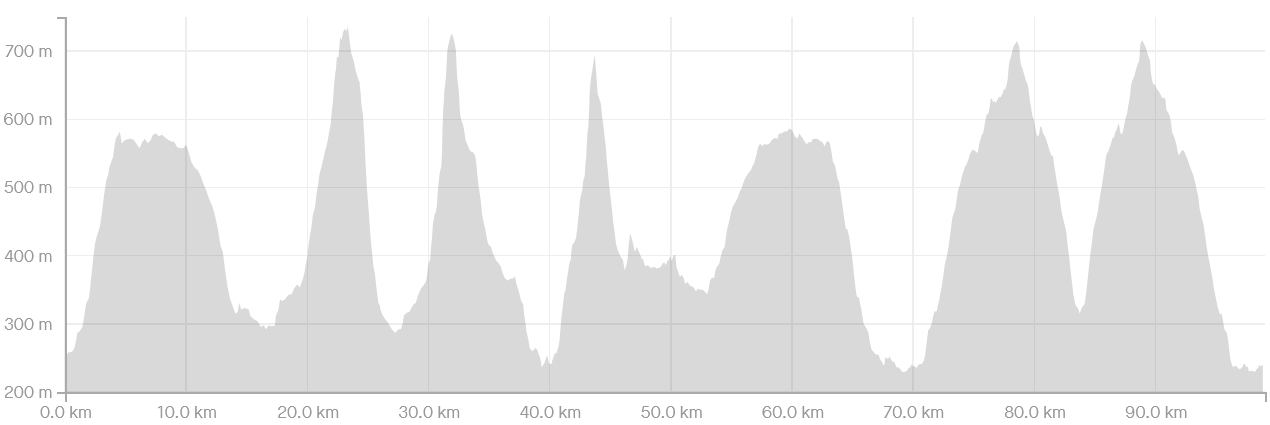
But it’s not just the physical demands that make this race tough—it’s the mental battle, too. The relentless ups and downs, combined with unpredictable weather in the Dales, can take their toll. Yet, there’s something incredibly rewarding about reaching the top of each peak and looking out over the sweeping landscapes, knowing that you’re pushing your limits.
The aid stations along the Yorkshire 3 Peaks 100km are few and far between, and they’re quite limited in what they offer. Water is even rationed. At one station, just before the ascent of Pen-y-Ghent, I was only allowed half a bottle of water. Faced with a long climb ahead and limited hydration, I had to improvise and buy a bottle of Coke to keep myself going. It’s a reminder that in a race like this, you need to be prepared for anything, including a bit of self-sufficiency.
The Lucky Break: Weather on My Side
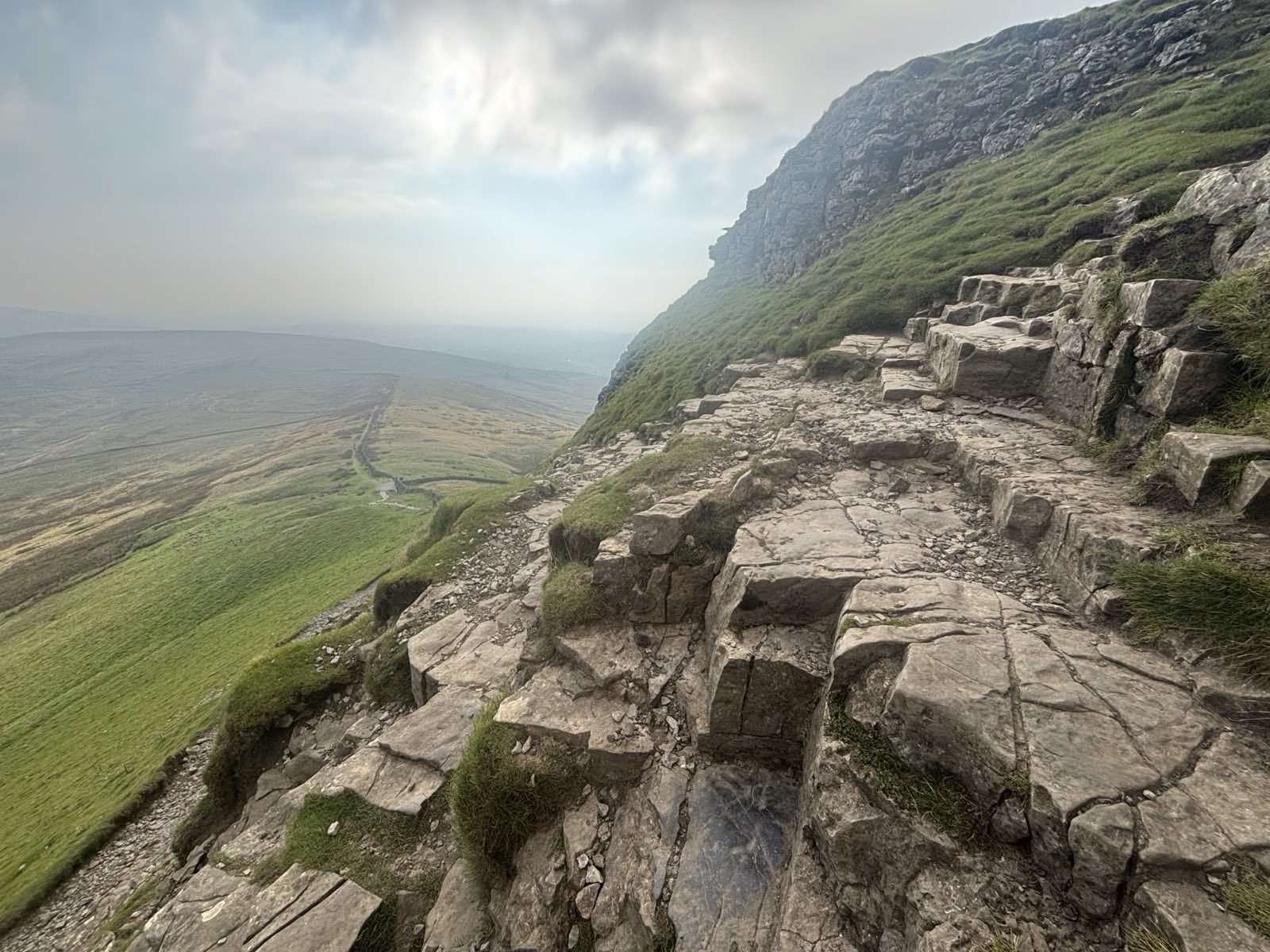
Thankfully, the weather was on my side throughout the day. Even during the long ascents, moving kept me warm, and I didn’t need to add extra layers despite climbing up through the clouds. It was one of those rare days in the Dales where the clouds would periodically part, offering stunning views across the valleys and the rolling countryside. It’s easy to get caught up in the physical challenge, but when the scenery is this beautiful, it’s worth taking a moment to appreciate your surroundings. Yorkshire really does have some of the most breathtaking landscapes in the UK.
The Climbs: Steep, Slow, and Brutal
The ascents of the peaks were straightforward but slow, especially when it came to Pen-y-Ghent. Scrambling up the rocky sections took some effort, but it was the descent that really tested me. As I made my way down, my quads started to scream in protest. What had been a slow jog soon turned into a struggle to even walk briskly. The steep descent was punishing, and for a while, running felt impossible.
A Word to the Wise: Train for Strength
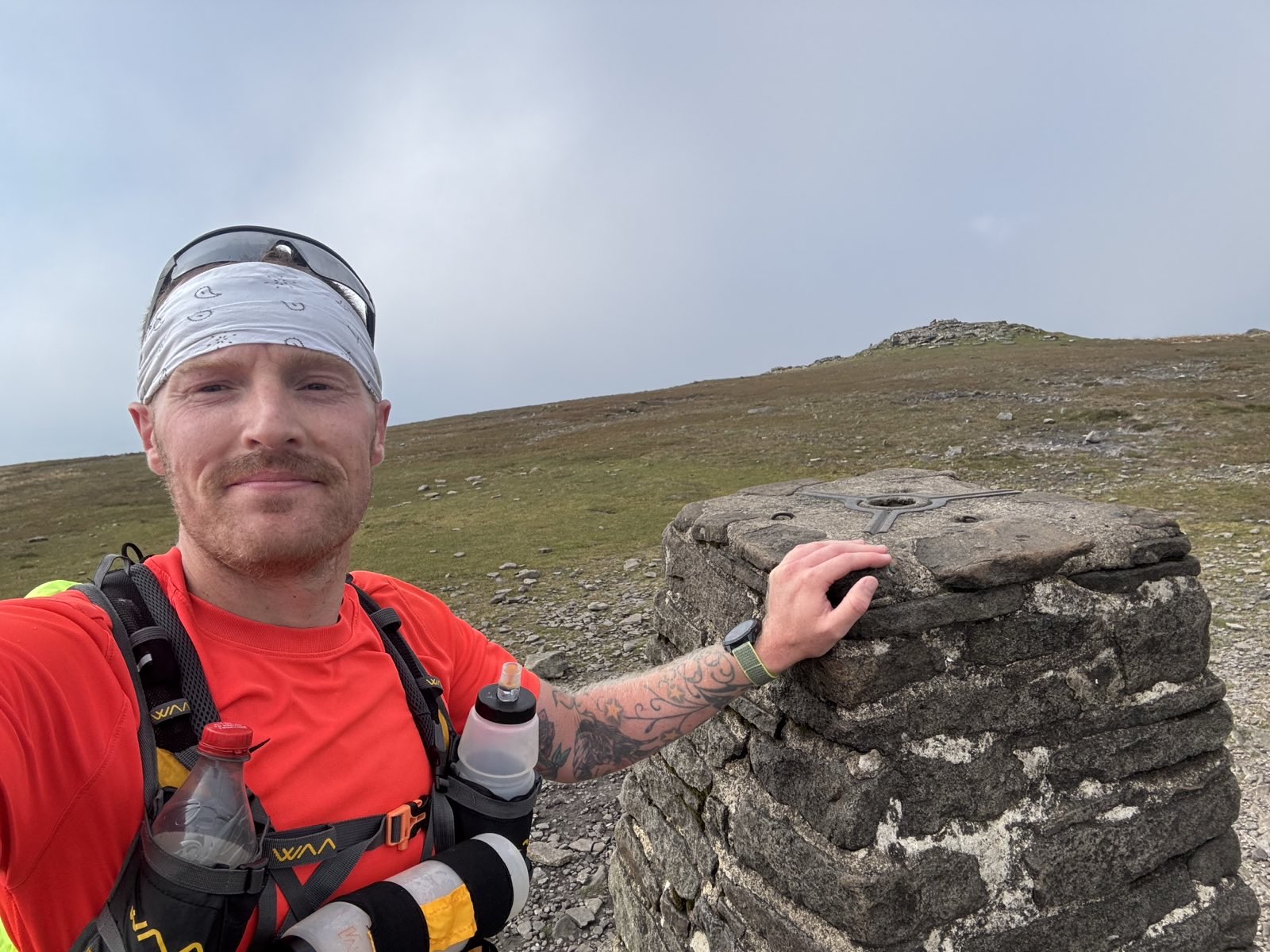
If you’re considering taking on this race, I can’t stress enough the importance of strength training. The constant climbing and descending put a massive strain on your legs, and if your muscles aren’t prepared, you’ll pay for it on the descents. Incorporating plenty of hill work and strength exercises into your training will make a huge difference on race day, especially when your legs are taxed from hours of relentless up-and-down movement.
Pushing Through the Final Stretch: The Last 30km of the Yorkshire 3 Peaks 100km
Eventually, my legs started cooperating again, and I managed to grind through the final 20km back to the race HQ. It wasn’t easy, but I felt myself getting stronger as I got closer, fueled by consistent high-carb intake and the welcome relief of some Paracetamol from the last aid station to dull the pain in my hips and quads.
My nutrition strategy was simple but effective: I relied mostly on Tailwind, Coke, PFH 90g gels, bananas, and—perhaps the highlight—a slice of pepperoni pizza at the final aid station. That little treat gave me a much-needed boost to keep moving forward.
The Decision to Keep Going
I arrived back at HQ just before sundown, and to my surprise, I immediately said I would head back out after a half-hour break to tackle the final 30km of the race. This decision shocked me, considering that for the last three hours, I’d been convincing myself that completing the initial 70km was enough. After all, I had conquered the Three Peaks, and my legs felt like they had taken on more than 100km already.
But this is where experience kicks in. Having completed several long races before, I knew the pain was temporary. I had learned that continuing is almost always possible, as long as I stay on top of my nutrition and pacing. There was no real excuse to stop now—I was managing my pain, and my energy levels were stable. So without overthinking it, I quickly said I’d continue.
The Power of Experience
This moment reinforced something I’ve come to understand in endurance racing: it’s often more mental than physical. Pain, fatigue, and doubt are all part of the journey, but experience teaches you how to navigate them. I knew that as long as I maintained my fuel and kept moving, I could push through. It wasn’t about being heroic; it was simply about trusting the process, knowing the hard part was behind me, and having confidence in my ability to finish what I’d started.
The Final Push: Tackling Great Shunner Fell in the Dark
I had 30 minutes to regroup at HQ before heading back out. The sight of my partner and daughter waiting for me was an instant boost. Emily quickly got me organised for the night section, helping me gather my gear and sorting out some much-needed hot food—a jacket potato with beans and cheese—and a strong coffee. I took a few minutes to roll out my back, stretch, and massage my quads back to life. Time flew, and before I knew it, it was time to head out again, feeling surprisingly good both physically and mentally. Next up: Great Shunner Fell.
Alone in the Dark
Before long, I found myself leaving the town behind, starting the climb in complete darkness with no one else in sight. The temperature had dropped, so I pulled on my beanie and gloves, adjusting to the chill as I followed the gradual, well-defined path. My headlamp illuminated just a few metres ahead, with nothing but blackness surrounding me.
As I climbed higher, the cloud thickened and the wind picked up. The path transitioned into sections of concrete slabs, with large swaths of wet marshland in between. Visibility was now down to just a couple of feet, and I frustratingly veered off the path multiple times. Each time, I found myself wandering in circles, searching for the slabs again. With nothing but fog, wind, and darkness around me, I began to wonder what on earth I was doing out there.
Then, the most unnerving moment of the race hit: my head torch suddenly flickered out. The feeling of being completely alone, lost in harsh conditions with zero visibility, was tough. I took my time to change the batteries as carefully as possible. The isolation and the weight of the situation sank in. This is why they took the kit check so seriously—I fully understood that now.
Finding My Way Again
Eventually, I managed to get back on course, relying on the GPS maps on my phone and watch to guide me. As I reached the summit of Great Shunner Fell, I started seeing the lead runners making their way back to HQ. It was a huge relief, not only to know I was heading in the right direction but also to realise I wasn’t the only one braving what felt like treacherous conditions. It reminded me that, despite the solitude, I was still part of a shared experience.
On the descent, I teamed up with another runner, Martin, and the return trip over Great Shunner Fell was much smoother. The weather had cleared up considerably, and having company made the miles go by much faster. We were even able to run large portions of the trail, something I hadn’t thought possible just hours before.
Crossing the Finish Line
Martin and I crossed the finish line together, finishing in joint 13th place out of the 24 runners who completed the full 100km and 3,516 metres of ascent. We completed it in 16 hours and 28 minutes—a gruelling but immensely satisfying achievement.
Recovery and Reflection
A few days have passed, and while I’m not injured, my quads are incredibly sore, and I’ve been dealing with significant fatigue. Walking properly has been a challenge. This was undoubtedly the most challenging single-day ultra I’ve ever completed—and tough for all the right reasons.
Looking back, it’s the moments of isolation, the fight against fatigue, and the sheer persistence it took to keep moving forward that make it all worthwhile. The Yorkshire 3 Peaks 100km pushed me to my limits, but it also reinforced what I love about ultrarunning: the camaraderie, the resilience, and the undeniable beauty of pushing through when everything around you tells you to stop.
 Chris runs ultras
Leave a comment