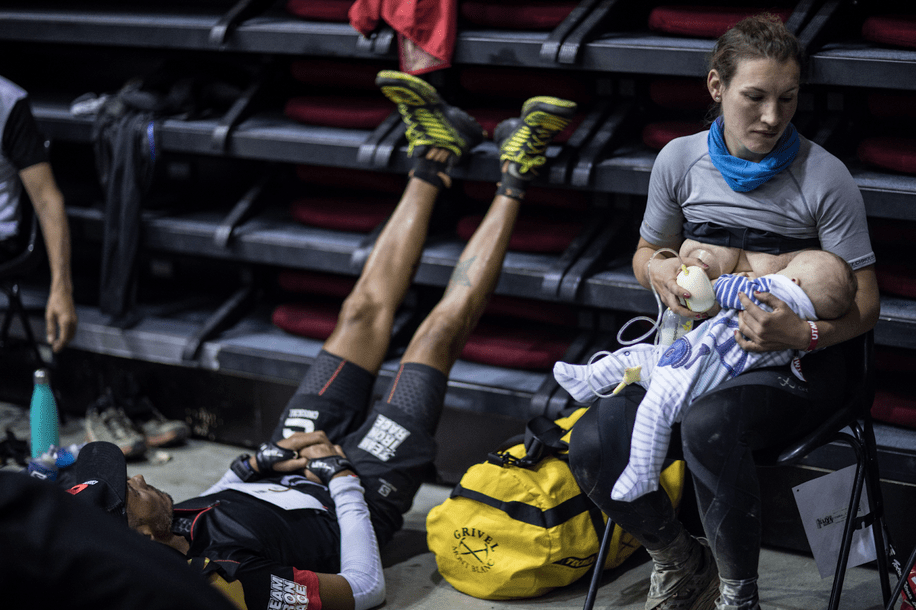
Gender disparity and the lack of female representation is unfortunately all too evident in ultramarathon running. In 2018, only 16% of participants in ultramarathon races were female (Runners World).
It’s a traditionally white, male sport and this was exemplified when a photo from Ultra-Trail du Mont-Blanc (UTMB) went viral. Sophie Power (ultrarunner, mother of 3, founder of She Races and a trustee of Women in Sport) was competing in the UTMB having recently given birth. She was photographed during the race simultaneously breastfeeding her 3 month old baby and expressing milk. It forced many to question how race organisers support women in their event planning.
Sophie had hoped to defer her UTMB place until she was fit and fully recovered from childbirth. However, although the organisation allowed competitors to defer places for injury, you couldn’t defer entry if you were pregnant, breastfeeding or had recently given birth. For them, pregnancy was seen as a choice.
Sophie was caught in an agonising dilemma as competing in (and completing) the UTMB had been a dream of hers. Having already lost a hard won place whilst pregnant with her first born child, she chose instead to compete with her second newborn baby rather than forfeit her place (www.sheraces.com).
Historically, races have been designed by men for men. UTMB failed to acknowledge or consider issues specific to women in their race planning. Whether deliberate or an oversight it’s clear that UTMB discriminated against Sophie by not having pregnancy/postpartum as a valid reason to defer entry. Furthermore, they failed to make reasonable adjustments to allow her to breastfeed (e.g. finding a private/safe space) and to accommodate the needs of her newborn child. Unfortunately, neglecting women’s needs is all too common in the logistical planning of races e.g, a lack of toilets on the course, an absence of sanitary bins and sanitary products at aid stations etc.
Ultramarathon running often involves running solo through remote areas or running during the night. Sophie Power argues that more needs to be done to make women feel safe when competing in races, e.g. safety trackers and adequate changing areas at the start/finish areas (www.sheraces.com).
Sophie now consults with various organisations on how to design their races through the female lens (as well as the male) and to make their events more accessible. Sophie wants to see more women (and mothers) on the start line and is in the process of creating a directory of the most inclusive races for women. She hopes, in due course, race organisers will hold the female competition in equal regard to the male.
As well as bridging the gender gap, more needs to be done to encourage women from Black, Asian and Minority Ethnic backgrounds to compete in running events. Black runners are under-represented in the running culture, with a lack of a voice in the organisation of events and visibility in its media (www.blacktrailrunners.run).
Optics are a huge factor in preventing black women from lining up on the start line of a race; for if they don’t see their race represented they are less likely to feel included. There are a few pioneers within the field who hope to break down the invisible barriers of race and enable fair and equal representation to all. In 2009, Jay Ell Alexander founded Black Girls Do Run in the USA with a mission to inspire, encourage and motivate black women to run. A UK branch soon followed: Black Girls Do Run UK.
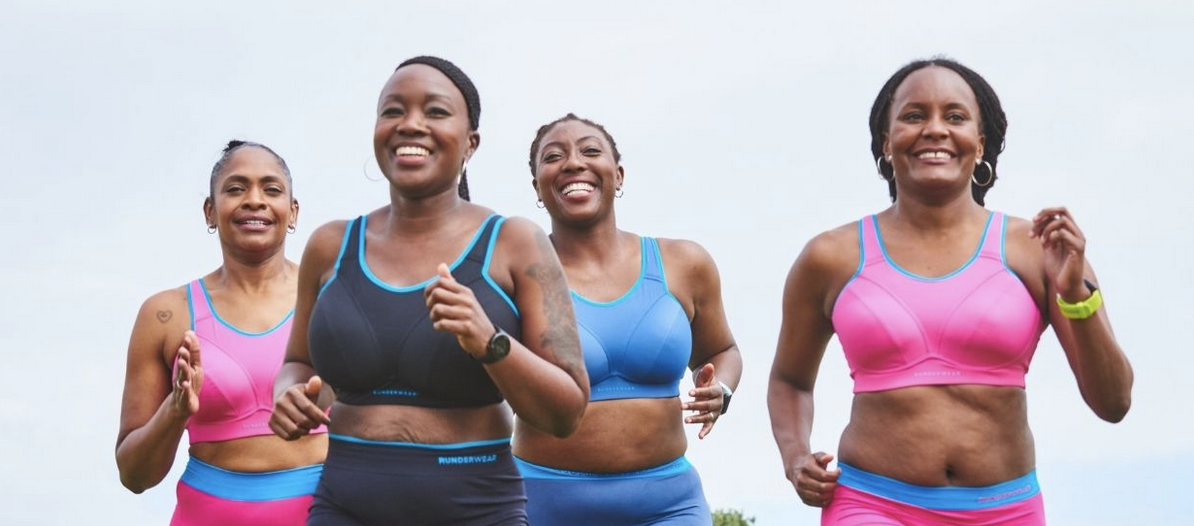
Black Trail Runners is a UK charity that promotes diversity within trail running; it is designed by and for black people and people of colour (although they welcome runners of any race, background and ability). Their event Black to the Trails (presented by Strava), is now in its third year and is considered the world’s most ethnically diverse trail running event (www.blacktothetrails.co.uk).
Poverty and social deprivation also impact upon accessibility of running events. Entry into races is expensive, not to mention the cost of gear, nutritional supplements etc.
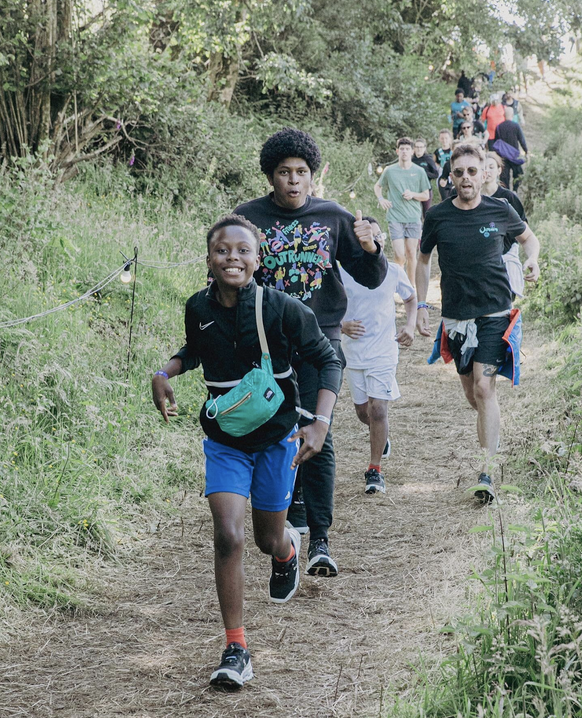
The Outrunners is a running club with a difference. As well as offering training sessions (for paid members), they host sports youth clubs in East London through their youth charity (www.theoutrunners.co.uk).
Their aim is to encourage young people from socially deprived backgrounds to get involved in running. Yet more needs to be done to diversify the sport.
I hope to take my daughter to Park Run every saturday morning and I look forward to competing in races whilst pushing her in the buggy. I hope that racing events will continue to grow, be more inclusive and allow any runner regardless of their race, gender or background to step onto the start line without fear that their needs will be overlooked. Noone should have to miss out on enjoying outdoor spaces (such as National Parks and National Trails) and the many physical and mental health benefits that running brings.
In April 2024 I will run The Marathon des Sables (MdS), a six-day, 250 km (160 mile) ultramarathon race in the Sahara Desert. I am raising money for Hope for Children which supports vulnerable, overlooked and exploited children, living in extreme poverty. As a soon-to-be father, I am acutely aware that my daughter will have access to opportunities that girls in developing countries aren’t afforded.
I would be most grateful if you would support this very worthy cause and my MdS journey. Please visit my JustGiving page at: https://www.justgiving.com/page/chris-mepham-1700516585862

By Emily Nash
 Chris runs ultras
Leave a comment